
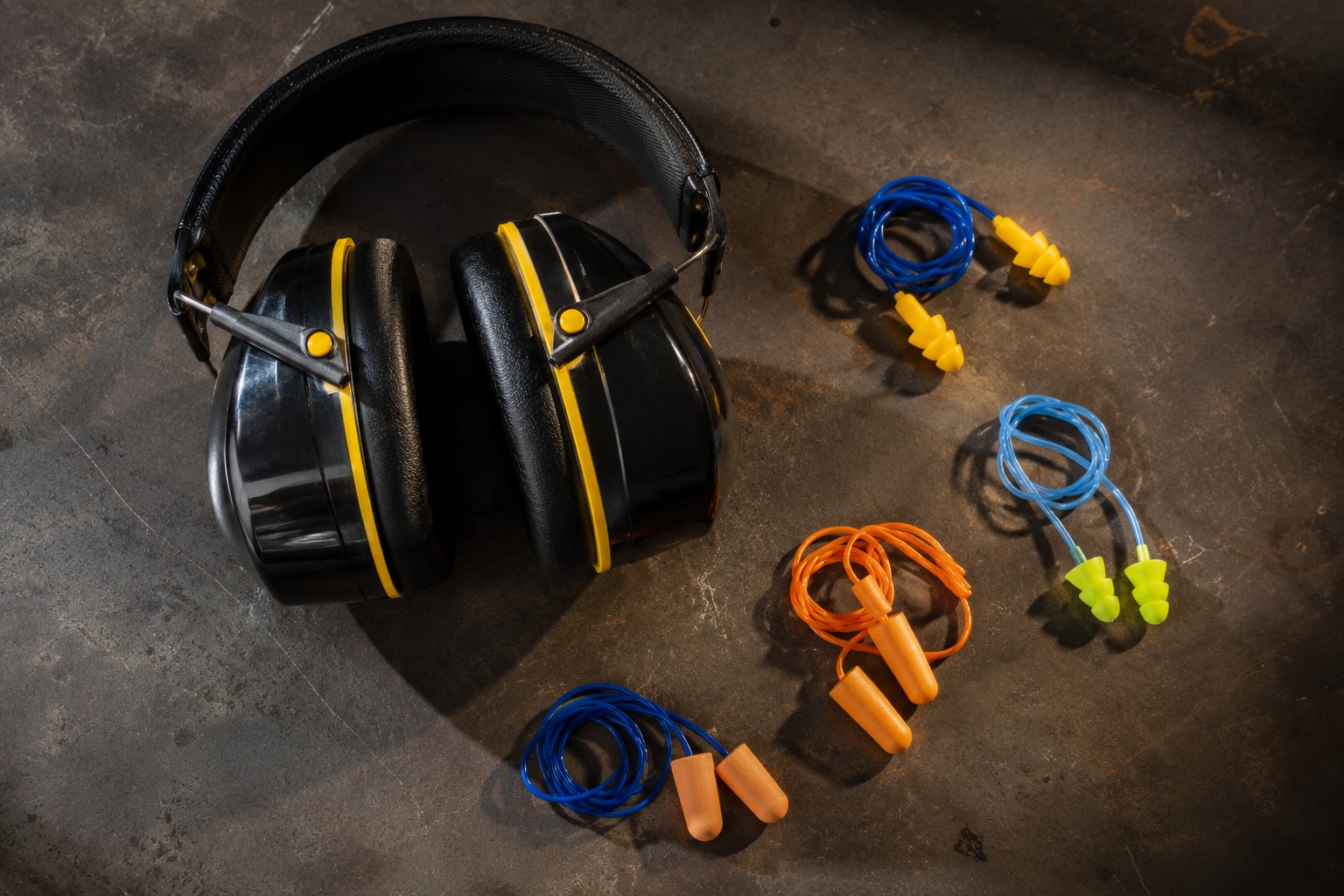
|
Type |
Typical NRR |
Best for |
Skip if |
|
Foam earplugs (disposable) |
28–33 |
All-shift industrial noise, daily replacement |
Hand hygiene during insertion is a concern |
|
Reusable plugs (flanged) |
25–30 |
Workers going in & out of noise all day |
You need the absolute highest NRR |
|
Banded plugs (semi-aural) |
17–25 |
Quick on/off for intermittent noise |
Sustained heavy noise — NRR is lower |
|
Earmuffs (over-the-head) |
22–31 |
Visible compliance, easy on/off, no insertion fiddling |
Hot environments or safety-glasses users |
|
Dual protection (plugs + muffs) |
+5 over best |
Anything above 100 dB exposure |
You don't actually need it — workers won't wear it |
Pick This If...
• Your team is on the floor all shift in steady noise → foam plugs
• Workers walk in and out of noisy zones all day → banded plugs or muffs
• You need to see compliance from across the room → earmuffs
• You're in food / beverage / pharma → corded, detectable plugs
• Exposure is over 100 dB → dual protection, no exceptions
|
OSHA requires variety You can't hand every worker the same yellow foam plug. The standard requires offering at least one earplug type and one earmuff type so workers can find something they'll actually wear. |
The Real Decider
Comfort beats spec sheet. The best-rated product in the world protects nobody if it sits in a pocket. Stock more than one option and let workers pick what they'll actually keep in.
Explore Ear Protection
Share:
NRR Cheat Sheet
How Loud Is Your Workplace?