
|
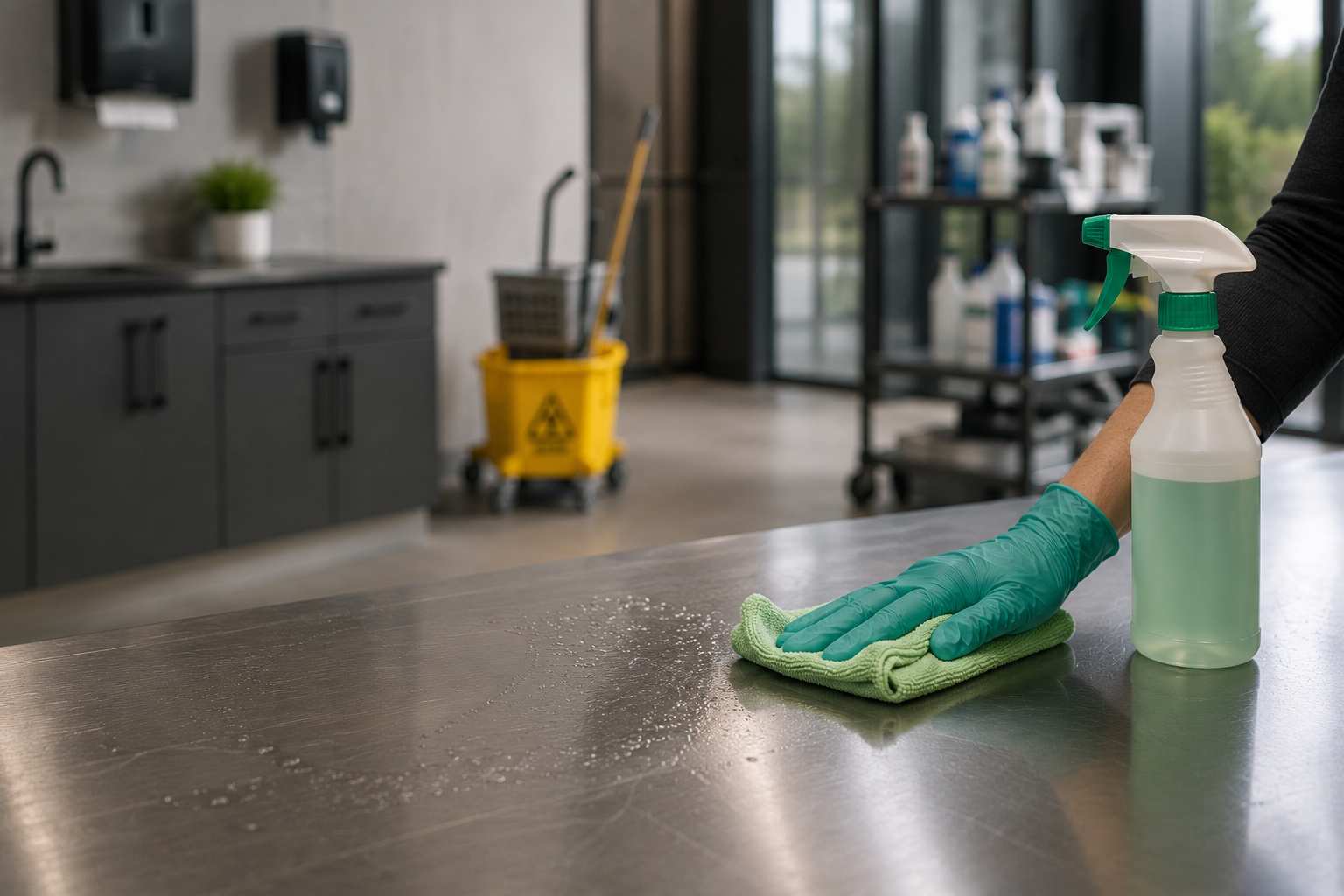
THE 30-SECOND VERSION |
· Always identify the surface before selecting a cleaner.
· Use the mildest cleaner that removes the contamination.
· Test new cleaners on an inconspicuous area first.
· Avoid highly alkaline or solvent cleaners on sensitive finishes.
· Follow dilution and manufacturer recommendations.
Why Surface Compatibility Matters
Industrial cleaners are designed for different types of soils and materials. While a heavy-duty degreaser may work well on steel machinery, it may dull painted finishes or discolor aluminum. Matching cleaner chemistry to the surface reduces maintenance costs, protects equipment investments, and creates more consistent cleaning results throughout the facility.
|
Surface Compatibility Guide |
|||
|
Surface |
Recommended Cleaner |
Use Caution With |
Best Practice |
|
Stainless Steel |
Neutral or stainless cleaner |
Harsh abrasives |
Wipe with the grain. |
|
Painted Metal |
General-purpose cleaner |
Strong degreasers |
Test before full application. |
|
Aluminum |
Mild neutral cleaner |
Highly alkaline cleaners |
Rinse thoroughly. |
|
Glass |
Glass cleaner |
Oil-based products |
Use a clean microfiber cloth. |
|
Plastic |
General-purpose cleaner |
Strong solvents |
Avoid discoloration. |
|
Concrete |
Neutral cleaner or degreaser |
Acidic cleaners unless specified |
Spot treat heavy stains. |
|
Epoxy Floors |
Neutral floor cleaner |
Highly abrasive products |
Use soft floor pads. |
|
Rubber |
Mild cleaner |
Petroleum solvents |
Allow surface to dry. |
Choosing the Right Cleaner
Start by identifying both the contaminant and the surface. Light dust and routine dirt typically require only a neutral cleaner, while oil and grease may require a degreaser. Selecting stronger chemistry than necessary rarely improves results and may increase costs or damage sensitive materials.
|
Surface Selection Checklist |
· Identify the material being cleaned.
· Determine the type of soil or contamination.
· Review manufacturer recommendations.
· Confirm dilution ratios.
· Test unfamiliar products on a small area.
· Train employees to follow standardized procedures.
|
Common Mistake |
Using the same industrial cleaner on every surface can shorten the life of painted equipment, flooring, and specialty finishes. Matching the cleaner to the material is just as important as matching it to the contamination.
|
Quick Fact |
Many surface issues blamed on 'poor-quality equipment' are actually caused by repeated use of incompatible cleaning chemicals over time.
|
The Bottom Line |
Surface compatibility should be part of every industrial cleaning program. By selecting cleaners based on both the contaminant and the material being cleaned, facilities can improve cleaning performance, reduce replacement costs, and help keep equipment looking and performing its best.
Explore Cleaners and Detergents
Share:
How Concentrated Industrial Cleaners Can Lower Cleaning Costs
When Do You Actually Need an Industrial Degreaser?