
THE 30-SECOND VERSION
- Manufacturing facilities need supplies beyond the production floor.
- Packaging, safety, cleaning, and breakroom products can be planned together.
- A shared purchasing list helps departments communicate their needs and avoid missed items.
- Consolidating suitable purchases with one supplier can reduce separate orders and supplier follow-ups.
- Always confirm product specifications, availability, and delivery needs before making changes.
WHY FACILITY-WIDE SUPPLY PLANNING MATTERS
Shipping is running low on stretch film. Employees need replacement gloves. The restrooms need paper towels, and the breakroom is almost out of cups.
These are different needs, but they all support the same facility. When each department manages supplies separately, purchasing teams may find themselves handling multiple orders, tracking different deliveries, and responding to last-minute requests.
Planning routine supplies together gives purchasing managers a clearer view of what the building needs—from the shipping dock to the employee breakroom.
FOUR SUPPLY CATEGORIES TO INCLUDE
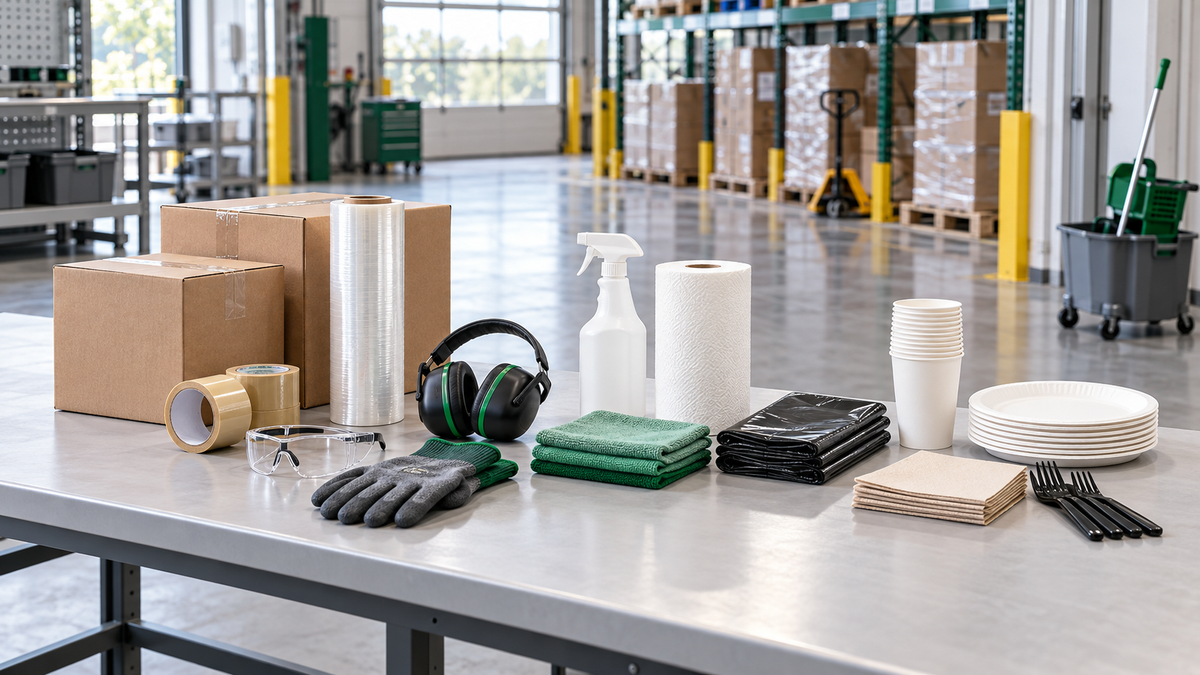
| Supply Category | Common Products | What to Consider |
|---|---|---|
| Packaging | Boxes, tape, stretch film, strapping, and labels | Product protection, equipment compatibility, and shipping volume |
| Safety | Gloves, eye protection, hearing protection, and first aid supplies | Task requirements, approved specifications, sizing, and replacement needs |
| Facility & Janitorial | Cleaners, wipers, trash liners, paper towels, soap, and mop equipment | Surface suitability, dispenser compatibility, facility traffic, and cleaning frequency |
| Food Service & Breakroom | Cups, lids, plates, cutlery, napkins, and food wraps | Employee count, shifts, everyday use, and employee meals or events |
A complete purchasing plan accounts for all four categories, even when different departments use or manage the products.
WHEN DOES USING ONE SUPPLIER MAKE SENSE?
Working with one supplier across several categories can make routine purchasing easier to coordinate. The right fit depends on whether that supplier can consistently meet your facility’s needs.
Before combining purchases, evaluate:
- Product coverage: Can the supplier provide the items your departments regularly use?
- Specification accuracy: Are the required sizes, materials, ratings, and compatible refills available?
- Availability and lead times: Can products arrive before existing stock runs out?
- Ordering and communication: Is it easy to request quotes, confirm details, and coordinate replenishment?
- Overall value: How do product pricing, case quantities, delivery costs, and purchasing time compare?
Start with frequently purchased items and expand as the arrangement proves useful.
PLAN REORDERS AROUND ACTUAL USAGE
Different departments use supplies at different rates. Shipping volume may drive stretch film consumption, while employee count and shift schedules affect restroom and breakroom demand.
Track typical usage and delivery lead times before setting reorder points. Keep an appropriate buffer for items that are essential to daily operations.
Coordinating purchasing does not mean every product needs to be ordered at the same time. It means using one clear plan to keep each area supplied.
COMMON MISTAKES
Comparing Price Without Checking Case Quantities
A lower case price does not always mean a lower cost per item. Compare equivalent quantities, sizes, and specifications before choosing a product.
Switching Products Without Confirming Compatibility
Similar-looking products may perform differently. Confirm dispenser refills, packaging equipment requirements, and approved safety specifications before making substitutions.
Leaving Shared Spaces Out of the Plan
Restroom and breakroom supplies are easy to overlook when purchasing focuses on production and shipping. Include them in routine inventory reviews.
Waiting Until Supplies Run Out
Last-minute orders leave less time to confirm availability and compare suitable options. Set reorder points for regularly used items.
QUICK TIP
Create one shared supply list with the approved item number, product specification, case quantity, department, typical usage, and reorder point. Assign someone in each department to report changes in demand.
PURCHASING CHECKLIST
✓ Have all departments identified their recurring supplies?
✓ Are approved specifications and case quantities documented?
✓ Have department leaders reviewed proposed substitutions?
✓ Are delivery lead times accounted for?
✓ Are restroom and breakroom supplies included?
✓ Does each item have a clear reorder point?
✓ Is someone responsible for monitoring stock and placing orders?
KEY TAKEAWAY
A manufacturing facility’s supply needs extend beyond production. Planning packaging, safety, facility care, and breakroom purchases together can make replenishment easier to manage and help purchasing teams stay ahead of everyday needs.
CONCLUSION
A more organized purchasing process starts with understanding what each department uses, documenting the right products, and choosing suppliers that can support those needs.
BuyRight Supply offers packaging, safety, facility and janitorial, and food service products to support everyday operations. Contact our team to explore which recurring purchases could be handled together.
Explore Packaging Supplies • Explore Safety Supplies • Explore Facility & Janitorial • Explore Food Service
Share:
When Should You Replace Your Work Gloves?
30, 40, 50, or 60 lb Kraft Paper: Which Roll Does Your Business Need?