
THE 30-SECOND VERSION
-
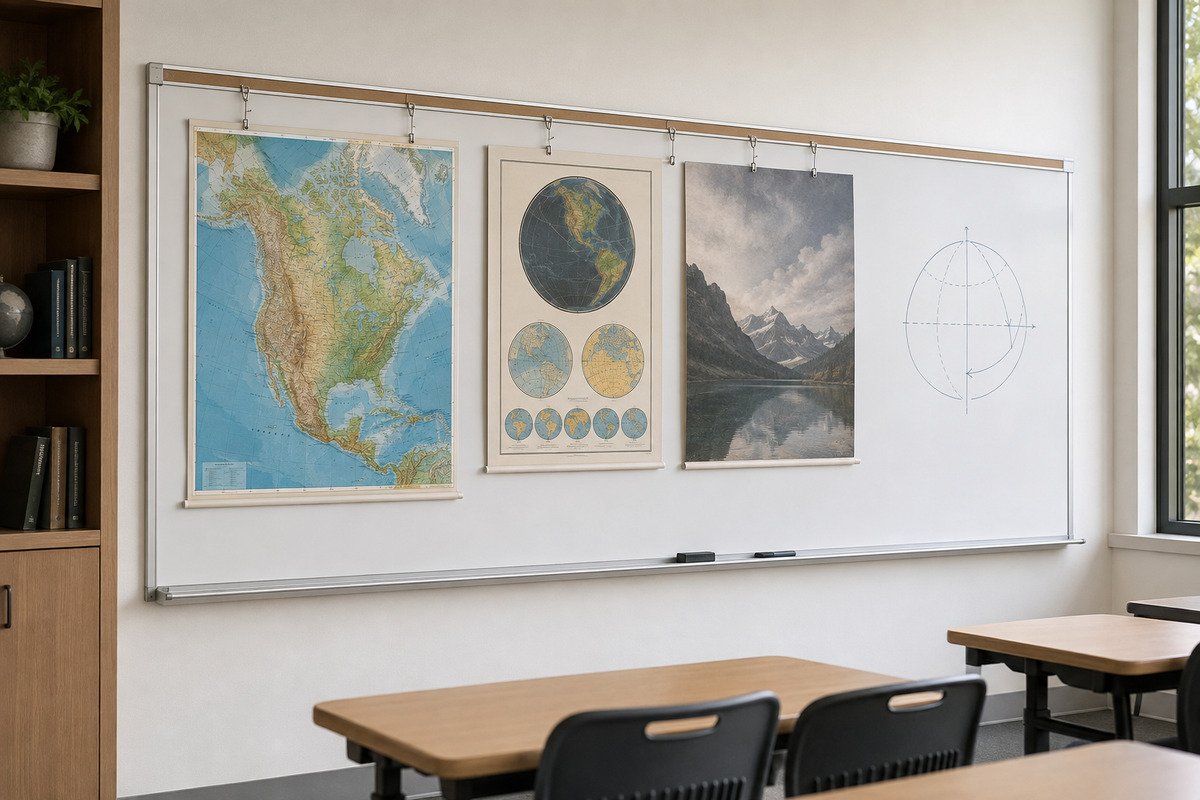
A map rail is a display strip installed along the top of a whiteboard.
-
It holds maps, charts, posters, reference sheets, and other lightweight materials.
-
Materials remain visible without covering the writing surface.
-
Map rails are especially helpful in classrooms, training rooms, planning areas, and shared workspaces.
WHAT IS A WHITEBOARD MAP RAIL?
A whiteboard map rail is a narrow accessory installed along the board’s top edge. It creates a dedicated place to hang printed materials while keeping the entire writing surface available.
Despite its name, a map rail is not limited to maps. It can display educational posters, student work, training diagrams, safety procedures, project plans, calendars, schedules, and other frequently referenced information.
HOW DOES A MAP RAIL WORK?
Map rails typically use hooks, clips, or similar accessories to hold lightweight materials. On some designs, these components slide along the rail so users can adjust the spacing for different sizes or display multiple items at once.
The rail is often integrated into the whiteboard’s top trim for a clean, coordinated appearance. Common options include 1-inch and 2-inch profiles, depending on the board design and project requirements.
WHY ADD A MAP RAIL?
The main benefit of a map rail is that it adds display space without reducing writing space. Printed materials stay visible above the board while the surface below remains open for changing notes, diagrams, and discussions.
| Benefit | How It Helps |
|---|---|
| Preserves writing space | Materials hang above the board instead of covering it. |
| Improves visibility | Reference information stays in a prominent location. |
| Adds flexibility | Materials can be changed or repositioned easily. |
| Reduces clutter | Posters and charts have a designated display area. |
WHERE ARE MAP RAILS MOST HELPFUL?
Classrooms
Teachers can display maps, lesson materials, educational charts, timelines, and student work while continuing to use the whiteboard for instruction.
Training Rooms
Instructors can keep procedures, diagrams, and reference materials visible while using the board for explanations and group activities.
Planning Areas
Teams can display project schedules, floor plans, workflows, or printed timelines while the whiteboard holds changing ideas and action items.
Shared Workspaces
Conference rooms, libraries, employee areas, and community spaces can use map rails for meeting materials, notices, schedules, and group information.
DOES YOUR SPACE NEED ONE?
A map rail may be a useful addition if:
✓ You regularly display maps, charts, posters, or large sheets of paper.
✓ You need printed references visible while using the whiteboard.
✓ Your room has limited wall or display space.
✓ Displayed materials change frequently.
✓ The board will support teaching, training, planning, or collaboration.
If the room is used mainly for occasional writing and printed materials are rarely displayed, a map rail may not be necessary.
QUICK TIP
Consider the map rail when selecting the whiteboard instead of adding it later. Integrating it into the board’s top trim can create a cleaner appearance and help ensure all components work together properly.
COMMON MISTAKE
Do not assume every map rail can support any material. Hooks, clips, and weight capacities vary, so confirm that the selected rail is suitable for what you plan to display.
KEY TAKEAWAY
A whiteboard map rail is a simple feature that makes a board more versatile. It keeps maps, charts, plans, and other reference materials visible while preserving the full writing surface for active communication.
For classrooms, training rooms, planning areas, and shared workspaces, it can create a more organized and flexible environment.
Explore Visual Communication Products
Share:
Whiteboard Features Explained: High-Gloss Surfaces, Blade Trays, and J-Trim Frames
What is a fire-rated tackboard, and when should you use one?