
|
READ THE FAILURE PATTERN FIRST |
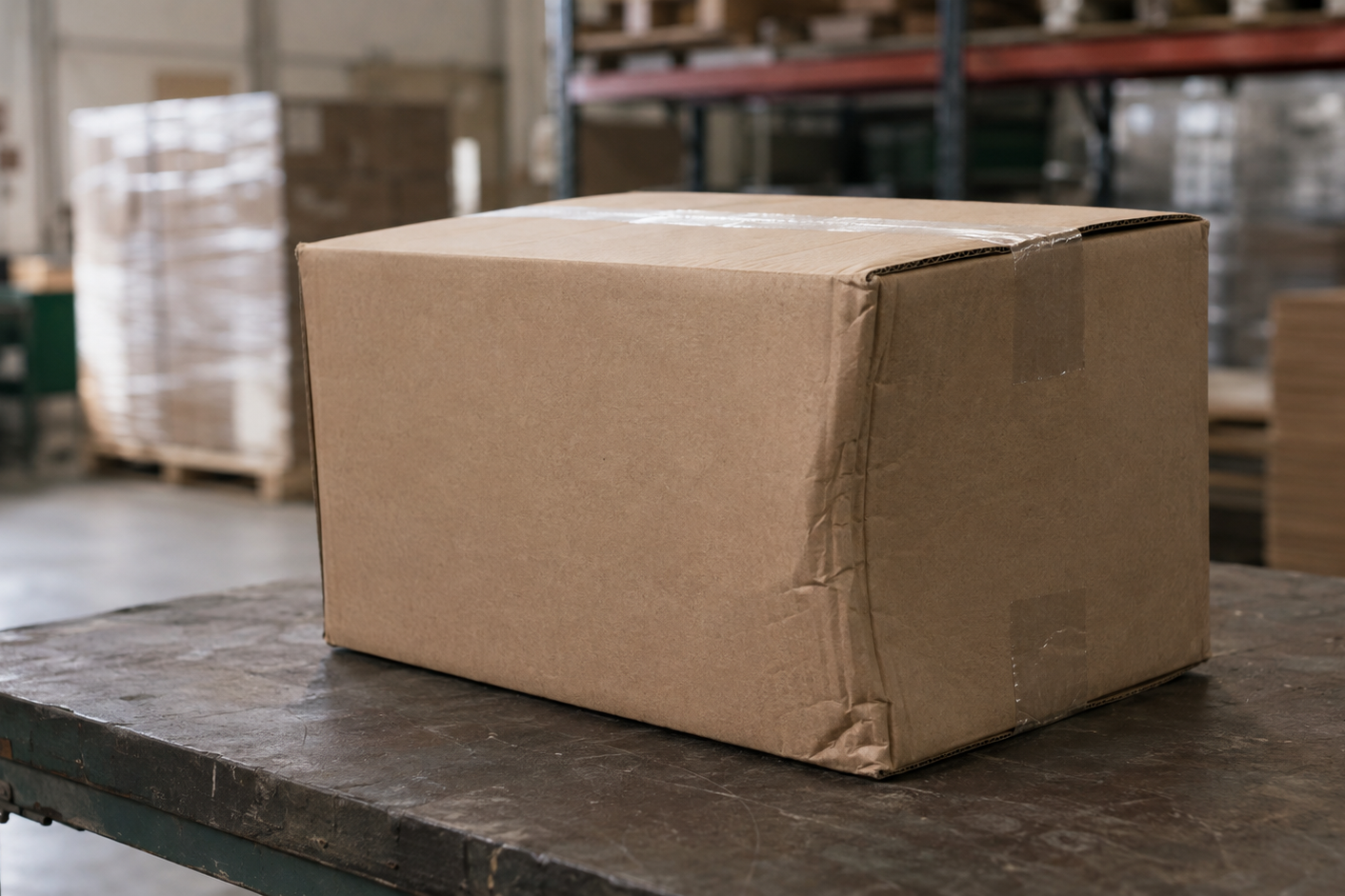
A damaged carton leaves clues. Where the damage appears, when it develops, and what the contents look like can separate a board-strength issue from a packing or handling issue. Replacing every failed box with heavier material may reduce symptoms, but it can also add cost while leaving the underlying process unchanged.
|
Visible failure |
Likely contributors |
Better first response |
|
Crushed corners or collapsed stack |
High stack load, weak pallet pattern, humidity, damaged flutes |
Check ECT, stacking height, overhang, storage time, and moisture exposure. |
|
Bulging sidewalls |
Loose product, oversized carton, outward pressure, insufficient restraint |
Right-size the carton and add dividers, pads, or properly placed void fill. |
|
Puncture or tear |
Sharp edges, shifting contents, rough conveyor contact |
Immobilize and shield the product; evaluate burst strength or wall construction. |
|
Top or bottom opens |
Wrong tape, dusty surface, short tape legs, poor compression |
Verify tape grade, application pressure, temperature, and seal pattern. |
|
Panel buckling |
Uneven load, poor scores, excessive headspace |
Distribute weight, reduce headspace, and inspect carton setup consistency. |
|
THE SIX MOST COMMON ROOT CAUSES |
1. Compression beyond the design limit. Cartons at the bottom of a pallet carry the combined load above them. Tall stacks, long storage periods, misaligned columns, and pallet overhang reduce the safety margin. Even an appropriate board grade can fail when weight lands on unsupported panels instead of vertical edges.
2. Moisture and humidity. Corrugated board is paper-based, so high humidity, condensation, wet floors, and cold-chain transitions can reduce stiffness. A carton that performs well in a dry sample test may soften after time in a greenhouse, cooler, freezer staging area, or unconditioned warehouse.
3. A carton that is too large. Excess space allows products to accelerate before striking a wall. It also creates unsupported panel area that can bow or buckle. Void fill can help, but it should restrain the item; simply filling the top of a carton does not stop movement at the bottom.
4. Concentrated or sharp loads. Metal corners, cast parts, bottles, hardware, and irregular components can focus force onto a small area. Pads, partitions, sleeves, or edge protection spread that force more effectively than a broad increase in box strength.
5. Weak or inconsistent closure. Tape selected only by width may not match the box weight, recycled content, dust level, temperature, or application speed. Insufficient wipe-down pressure and short tape legs can cause an otherwise sound carton to open during handling.
6. Distribution conditions that were never tested. Parcel drops, conveyor impacts, vibration, clamp handling, mixed pallets, and repeated transfers are different from a short local delivery. A box specification should reflect the harshest normal part of the route, not the cleanest part.
|
⚠ COMMON MISTAKE Problem |
|
A PREVENTION CHECKLIST FOR OPERATIONS TEAMS |
✓ Measure the product and specify the carton using inside dimensions.
✓ Confirm packed weight, weight distribution, and orientation—not just item weight.
✓ Match ECT, burst strength, flute, and wall construction to the expected risks.
✓ Eliminate pallet overhang and align cartons so vertical edges carry the load.
✓ Use inserts, dividers, pads, or cushioning to prevent movement and concentrate less force.
✓ Select tape for carton surface, weight, temperature, and application method.
✓ Keep corrugated off wet floors and control humidity exposure where practical.
✓ Run a small shipment trial and inspect cartons at the destination.
|
TURN DAMAGE REPORTS INTO USEFUL DATA |
A useful damage report should include the carton specification, supplier lot if available, product and packed weight, photos of every side, packing materials, tape pattern, pallet location, storage duration, and shipping method. Note whether similar cartons failed in the same position. Patterns across several shipments are more reliable than a single damaged sample.
When testing a correction, change one major variable at a time when practical. If the team simultaneously changes board grade, carton size, tape, and pallet pattern, it may stop the damage but never learn which improvement created the result. Controlled trials make future purchasing decisions faster and more defensible.
|
💡 QUICK TIP Keep one unopened control carton from each trial and label it with the full specification and date. Comparing it with returned or damaged cartons can reveal moisture, compression, or setup changes that are difficult to see from photographs alone. |
|
CONCLUSION: FIX THE PACKAGING SYSTEM |
Corrugated performance depends on the complete package. Board strength matters, but carton dimensions, product restraint, tape, stacking, storage, and distribution conditions determine how that strength is used. The most cost-effective correction is the one that addresses the observed failure without creating unnecessary material or labor.
|
✓ KEY TAKEAWAY Diagnose before upgrading. Read the damage pattern, document the conditions, correct the most likely root cause, and validate the packed carton in its real distribution environment. |
Explore Corrugated
Share:
32 ECT vs. 200# Test: What’s the Difference?
How to Choose the Right Corrugated Box for Your Product