
THE 30-SECOND VERSION
· Improve visibility of important information.
· Reduce communication errors.
· Support lean workflows and team accountability.
· Work in nearly any commercial environment.
· Choose board size and surface based on usage.
Why Whiteboards Still Matter
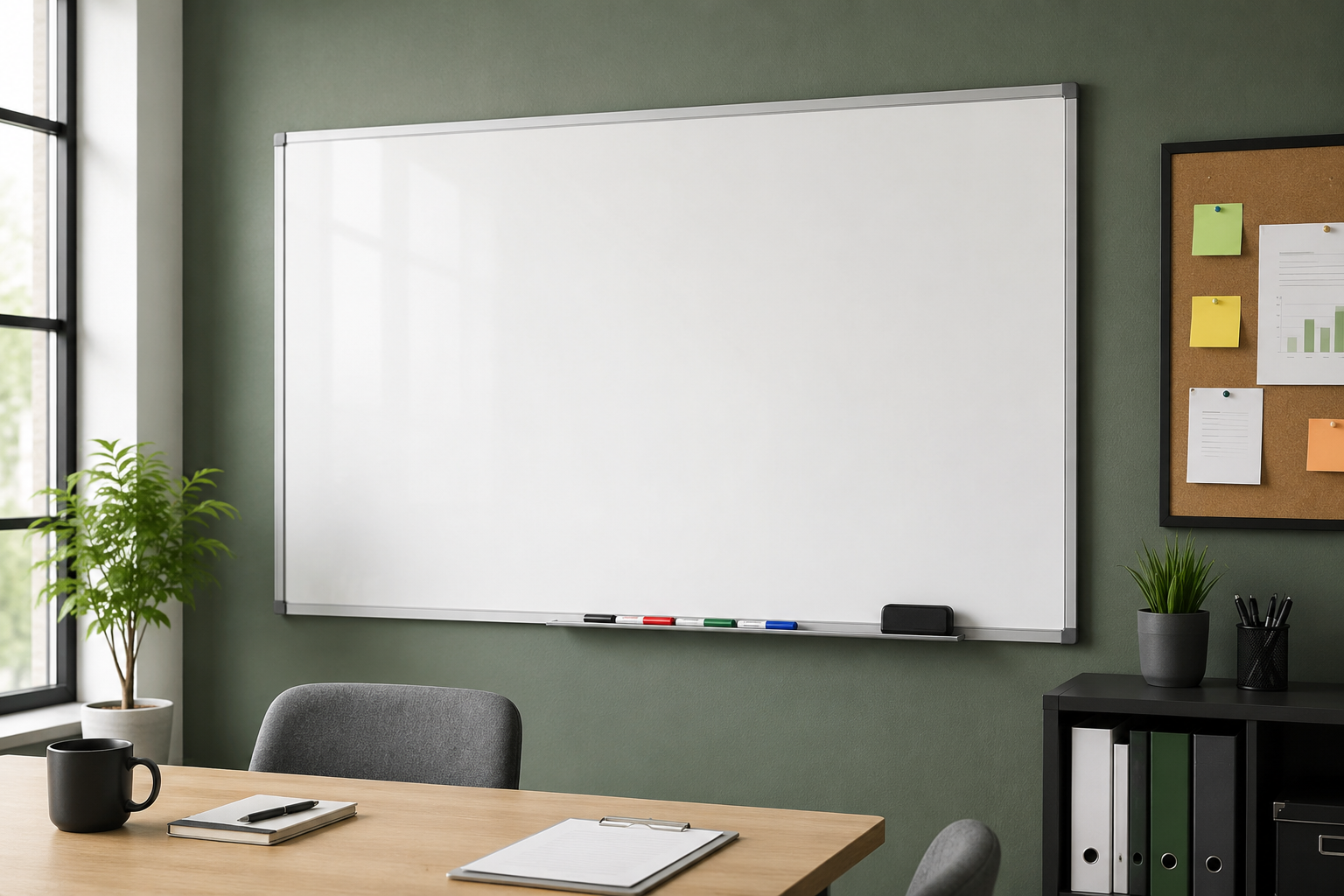
Digital tools are valuable, but many organizations still rely on physical visual communication because it is immediate, always visible, and accessible to everyone walking through a space. A well-placed whiteboard keeps priorities in front of employees instead of buried in software.
10 Practical Uses
|
Application |
Benefit |
|
Production Scheduling |
Track daily production goals, machine status, and shift priorities. |
|
Project Management |
Visualize milestones, owners, and deadlines. |
|
Sales Performance |
Display goals, metrics, and wins. |
|
Warehouse Operations |
Coordinate inbound shipments, staging, and outbound orders. |
|
Maintenance Planning |
List preventive maintenance schedules and equipment status. |
|
School Communication |
Share announcements, assignments, and classroom activities. |
|
Healthcare Coordination |
Support patient flow and department communication while respecting privacy. |
|
Restaurant Prep |
Organize prep lists, specials, and cleaning tasks. |
|
Agile Team Boards |
Track work in progress with simple Kanban layouts. |
|
Visitor & Safety Information |
Display emergency contacts, facility notices, or visitor instructions. |
Quick Tip
Place whiteboards where decisions are made—not where people rarely walk. Visibility has a greater impact than board size.
Choosing the Right Board
High-use environments typically benefit from porcelain or glass surfaces because they resist ghosting and wear. Standard dry erase boards are often suitable for lighter office use. Consider frame style, mounting location, accessories such as map rails or marker trays, and available wall space.
Decision Checklist
✓ How often will the board be used?
✓ Who needs to see it?
✓ Will magnets be required?
✓ How much writing space is needed?
✓ Is long-term durability important?
Did You Know?
Many lean manufacturing facilities combine whiteboards with color-coded magnets and printed templates to standardize daily management meetings.
Key Takeaway
The best whiteboard is the one that makes important information impossible to miss. Matching the board to the workflow helps improve communication, accountability, and day-to-day efficiency.
Conclusion
Whiteboards remain one of the simplest and most cost-effective visual communication tools available. From manufacturing floors to classrooms and corporate offices, they create a shared source of truth that helps teams coordinate work, identify issues quickly, and make better decisions. Selecting the appropriate size, surface, and accessories ensures the board supports the way your team actually works rather than becoming unused wall décor.
Explore Visual Communication
Share:
Designing Collaborative Workspaces with Whiteboards and Tack Boards
How Much Toilet Paper Does Your Facility Really Need?