
|
THE 30-SECOND VERSION |
Why Forecasting Matters
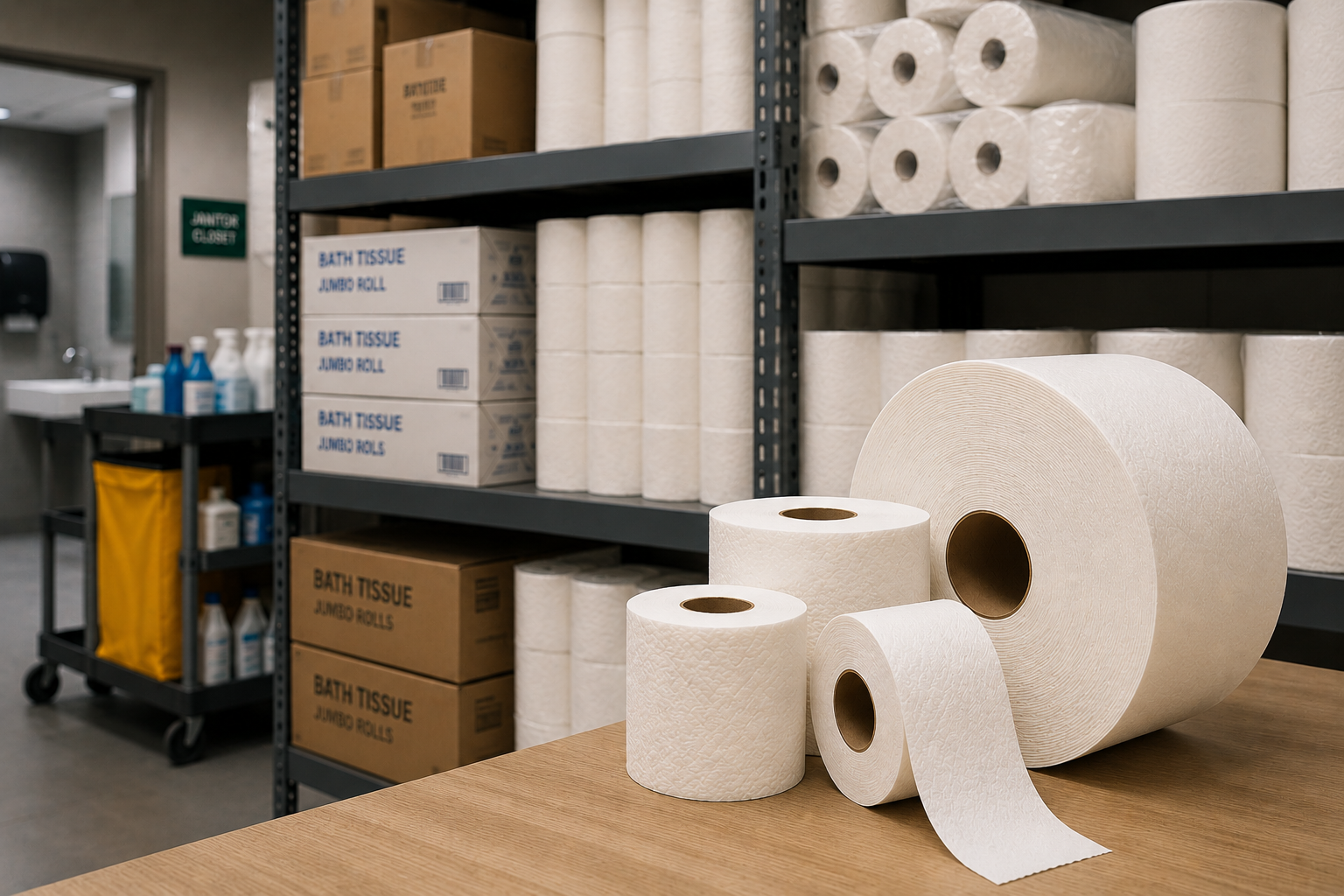
Many facilities order toilet paper based on habit instead of measurable usage. Tracking restroom traffic, occupancy, and historical consumption helps reduce stockouts, minimize excess inventory, and improve purchasing accuracy. The goal is not to predict every roll perfectly but to establish a repeatable process that adapts as your facility changes.
Schools, manufacturing plants, offices, healthcare facilities, and restaurants all have different usage patterns. A simple review every few months often uncovers opportunities to reduce costs without affecting restroom availability.
Planning Guide
|
Facility |
Daily Users |
Suggested Starting Inventory |
|
Small office |
<25 |
1-2 cases |
|
Office/School |
25-100 |
2-5 cases |
|
Manufacturing |
100-250 |
5-10 cases |
|
Public facility |
250+ |
10+ cases |
|
Quick Tip |
Five Questions Before Ordering
✓ Has restroom traffic changed?
✓ Are dispenser styles appropriate?
✓ Are there seasonal peaks?
✓ Is emergency ordering increasing?
✓ Is storage space adequate?
|
Common Mistake |
|
Did You Know? |
Conclusion
The right inventory level depends on usage patterns rather than guesswork. Facilities that monitor consumption and review purchasing regularly are more likely to reduce costs while maintaining a positive restroom experience.
|
Key Takeaway |
Explore Toilet Paper
Share:
10 Practical Business Uses for Whiteboards Beyond Conference Room Meetings
Mobile vs. Wall-Mounted Paper Dispensers: Which Fits Your Facility?