
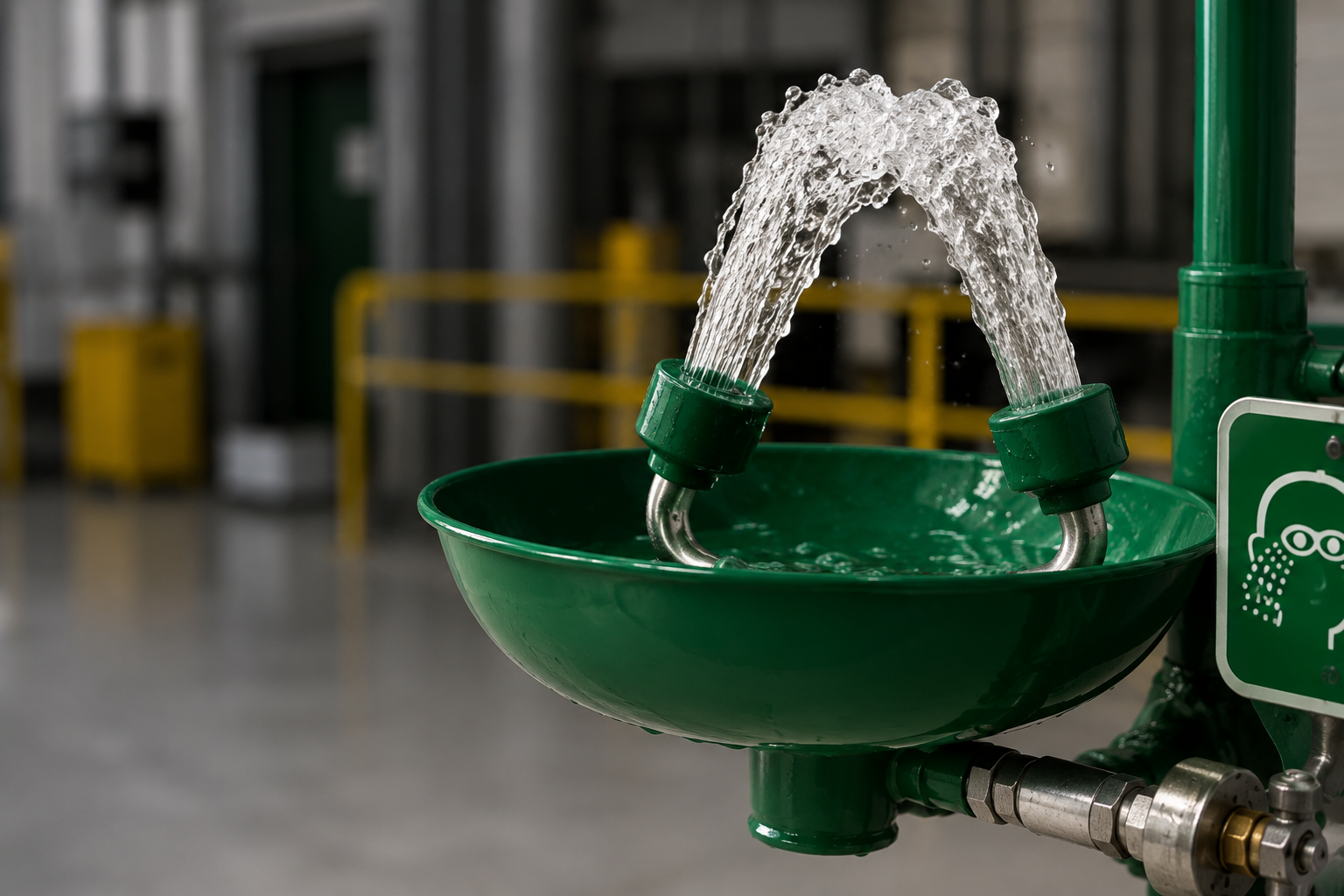
THE 30-SECOND VERSION
· Keep eyewash stations unobstructed and visible.
· Inspect and activate units weekly.
· Maintain clean, tempered water where required.
· Train employees before an emergency occurs.
· Verify placement matches current workplace hazards.
Why Eyewash Stations Fail
Most eyewash station failures are not caused by equipment defects—they result from poor placement, inconsistent maintenance, or lack of employee familiarity. During a chemical splash, every second matters. Eliminating preventable mistakes improves response time, reduces injury severity, and supports regulatory compliance.
1. Blocking Access
Boxes, pallets, or equipment prevent immediate access. Emergency equipment should remain clear at all times.
2. Installing Too Far Away
Employees may not reach the station within the recommended travel time, delaying treatment.
3. Skipping Weekly Activation
Regular flushing helps verify operation and reduces stagnant water buildup.
4. Poor Visibility
Missing signs or inadequate lighting make stations harder to locate during an emergency.
5. Ignoring Water Quality
Dirty or excessively hot or cold water discourages proper flushing and may create additional hazards.
6. Failing to Train Employees
Workers should know station locations and proper flushing procedures before an incident occurs.
7. Forgetting to Reassess Risks
Facility layouts and hazards change over time. Eyewash locations should be reviewed whenever operations change.
Quick Inspection Checklist
|
Inspection Item |
Status |
|
✓ Access is unobstructed |
Review |
|
✓ Signs are visible |
Review |
|
✓ Weekly activation documented |
Review |
|
✓ Water appears clean |
Review |
|
✓ Employees know location |
Review |
|
✓ Hazard assessment current |
Review |
💡 Quick Tip: Include eyewash station inspections in routine safety walks instead of treating them as a separate task.
⚠ Common Mistake: The station exists, but no one verifies it can actually be used quickly during an emergency.
ℹ Did You Know? Regular activation also helps identify damaged valves and plumbing issues before an emergency exposes them.
Key Takeaway: An eyewash station only protects employees when it is accessible, functional, visible, and familiar to every worker who may need it.
Conclusion
Eyewash stations are a critical layer of workplace protection, but they require ongoing attention to remain effective. Reviewing placement, maintenance records, employee training, and changing facility conditions helps ensure the equipment performs as intended when seconds matter most. Small improvements today can significantly reduce the consequences of an eye injury tomorrow.
Conduct routine audits with maintenance and safety teams, document findings, and correct issues immediately. Review eyewash locations whenever machinery, storage, or chemical processes change. Consistent attention creates a safer workplace and demonstrates a proactive safety culture.
Explore First Aid
Share:
How Often Should You Inspect and Restock a Workplace First Aid Kit?
Workplace First Aid Kits: What OSHA Requires (and How to Choose the Right One)