

|
THE 30-SECOND VERSION |
|
• Anti-fatigue mats reduce discomfort from prolonged standing. |
|
Understanding the Difference |
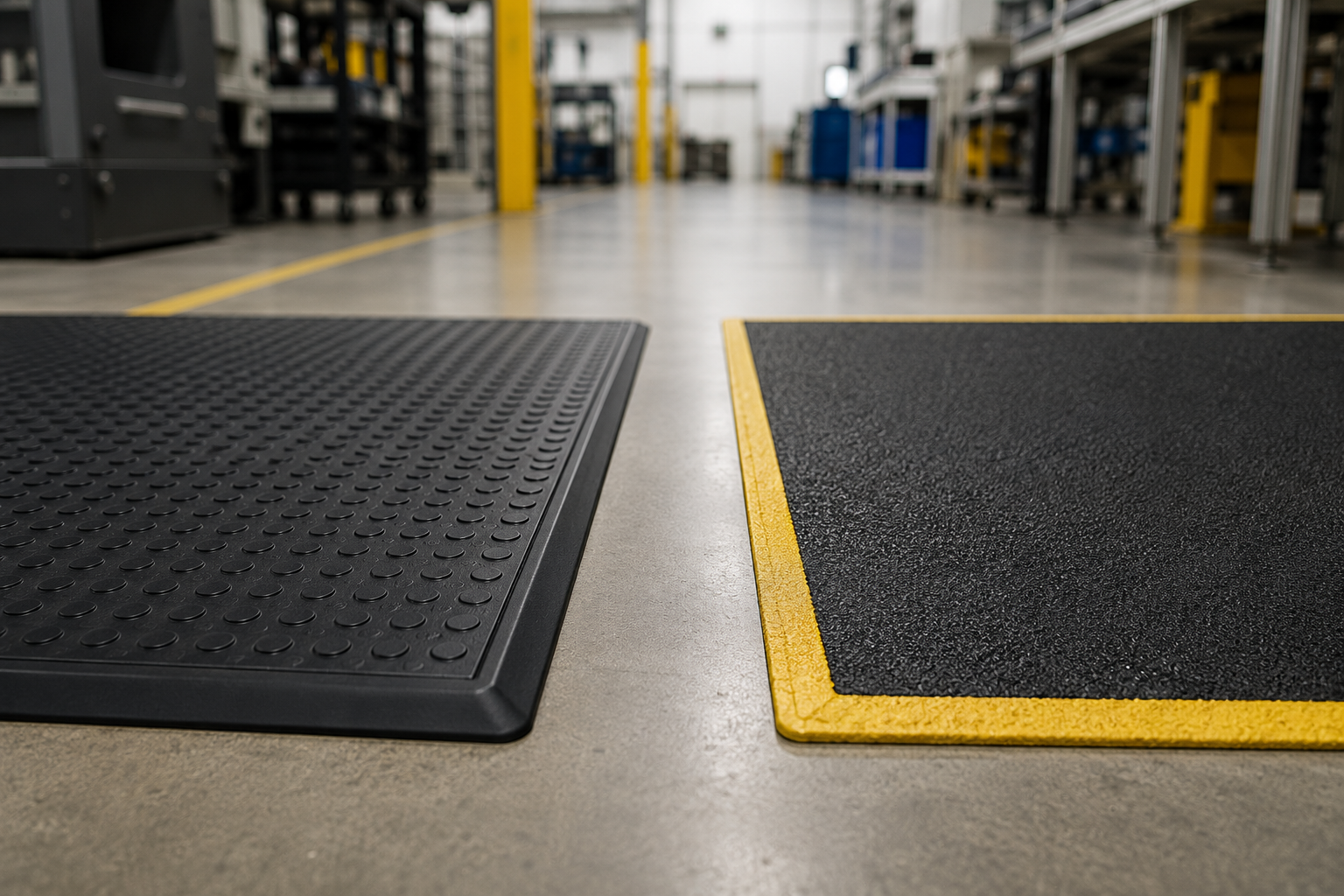
Anti-fatigue mats and anti-slip mats often look similar, but they solve different workplace problems. Anti-fatigue mats are designed to reduce physical strain for employees who stand for long periods. Anti-slip mats are designed to increase traction and reduce the likelihood of slips on wet, oily, or otherwise slick surfaces. Understanding that distinction helps facilities invest in the right solution instead of assuming one mat can do every job.
|
Comparison Guide |
||
|
Feature |
Anti-Fatigue |
Anti-Slip |
|
Primary Goal |
Reduce standing fatigue |
Improve traction |
|
Best Location |
Packing stations, assembly |
Entrances, kitchens, docks |
|
Cushioning |
High |
Low–Moderate |
|
Wet Environments |
Sometimes |
Excellent |
|
Primary Benefit |
Comfort |
Slip prevention |
|
When to Use Each Mat |
||
Choose anti-fatigue mats where employees remain in one position for extended periods, such as assembly lines, packaging stations, inspection areas, and cashier locations. Choose anti-slip mats anywhere moisture, oils, grease, or frequent spills create a traction hazard. In environments where employees stand for long periods on wet floors, look for industrial-grade mats specifically engineered to provide both cushioning and slip resistance.
|
Quick Tip |
|
Evaluate how employees use the space before selecting a mat. Standing fatigue and slipping hazards often require different solutions. |
|
Simple Decision Framework |
✓ Employees stand in one place for hours → Anti-fatigue mat
✓ Floors become wet or oily → Anti-slip mat
✓ Both conditions exist → Combination industrial mat
|
Common Mistake |
|
Buying based on thickness alone. A thicker mat is not automatically safer. The environment should determine the correct product. |
|
Did You Know? |
|
Proper floor mat selection can improve employee comfort while reducing maintenance needs and helping minimize common slip-related hazards. |
|
Buyer Checklist |
☐ Floor stays dry or becomes wet?
☐ Standing workstation or walking path?
☐ Exposure to oils or chemicals?
☐ Need for drainage?
☐ Expected daily foot traffic?
☐ Beveled edges required to reduce trip hazards?
|
Conclusion |
The best floor mat is the one designed for the conditions it will face. Anti-fatigue mats improve comfort, anti-slip mats improve traction, and combination products address both needs in demanding industrial environments. Matching the product to the workplace helps improve safety, employee well-being, and long-term performance.
|
Key Takeaway |
|
Identify the workplace hazard first, then choose the floor mat designed to solve that specific problem for the best long-term results. |
Explore Facility & Warehouse
Share:
How to Store Flammable Liquids Safely in the Workplace
Preventing Slips, Trips & Falls in Industrial Facilities