
|
THE 30-SECOND VERSION |
|
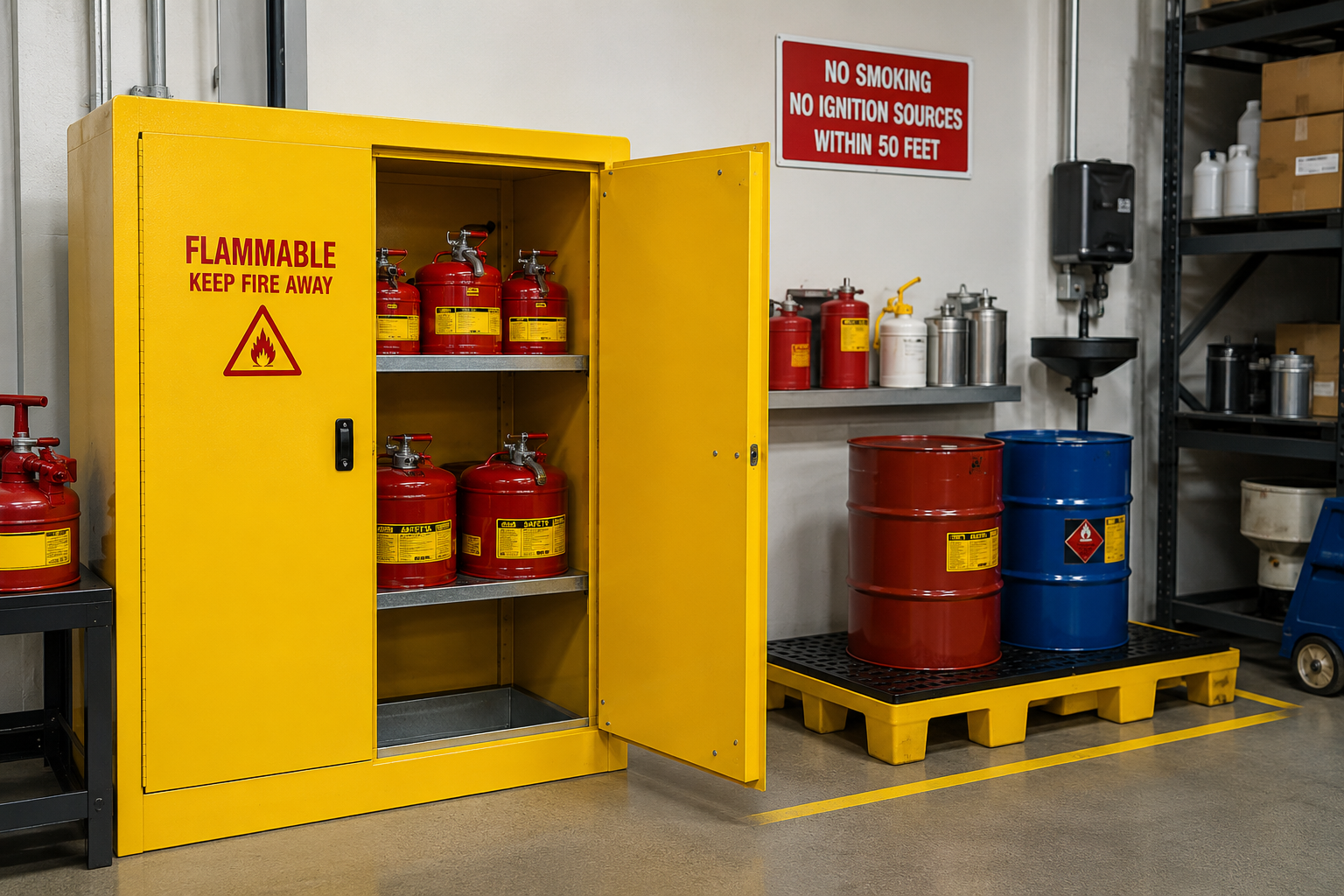
• Store flammable liquids in approved containers. |
|
Why Proper Storage Matters |
Improperly stored flammable liquids increase the risk of fires, employee injuries, property damage, and costly downtime. Safe storage practices help control these risks while making facilities easier to organize, inspect, and maintain. Good storage is about reducing hazards before an incident occurs.
|
Best Practices |
✓ Use approved containers designed for flammable liquids.
✓ Store products away from heat, sparks, and open flames.
✓ Clearly label every container.
✓ Keep aisles and emergency access routes clear.
✓ Inspect containers for leaks or damage on a routine schedule.
|
Choosing the Right Storage Solution |
||
|
Situation |
Recommended Solution |
Why |
|
Small quantities |
Approved safety cans |
Safer dispensing and transport |
|
Routine facility storage |
Flammable storage cabinet |
Reduces fire exposure |
|
Maintenance areas |
Clearly labeled storage zone |
Improves organization |
|
Mixed chemicals |
Separate by compatibility |
Helps prevent dangerous reactions |
|
Quick Tip |
||
|
Store only the amount of flammable liquid needed for daily operations at workstations. Keep bulk quantities in designated storage areas. |
||
|
Common Mistakes |
||
Leaving containers open, storing products near ignition sources, mixing incompatible chemicals, or using damaged containers are common mistakes that increase workplace risk. Consistent inspections and employee training help prevent these issues.
Treating any cabinet as suitable for flammable liquids. Standard storage cabinets are not designed to provide the same level of protection as cabinets intended for flammable materials.
|
Did You Know? |
|
Proper storage practices can simplify inspections, reduce housekeeping issues, and improve emergency response readiness in addition to reducing fire risk. |
|
Facility Storage Checklist |
☐ Containers are labeled
☐ Storage area is well ventilated where appropriate
☐ Cabinets are unobstructed
☐ Ignition sources are controlled
☐ Employees know spill and emergency procedures
☐ Routine inspections are documented
|
Conclusion |
Safe flammable liquid storage is built on simple, consistent practices: approved containers, organized storage, proper separation, routine inspections, and employee awareness. These steps help reduce fire hazards while supporting a safer, more efficient workplace.
|
Key Takeaway |
|
Choose storage solutions based on the hazards present, not convenience. A proactive storage program helps protect employees, facilities, and daily operations. |
Explore Facility & Warehouse
Share:
Workplace First Aid Kits: What OSHA Requires (and How to Choose the Right One)
Anti-Fatigue Mats vs. Anti-Slip Mats: What's the Difference?