
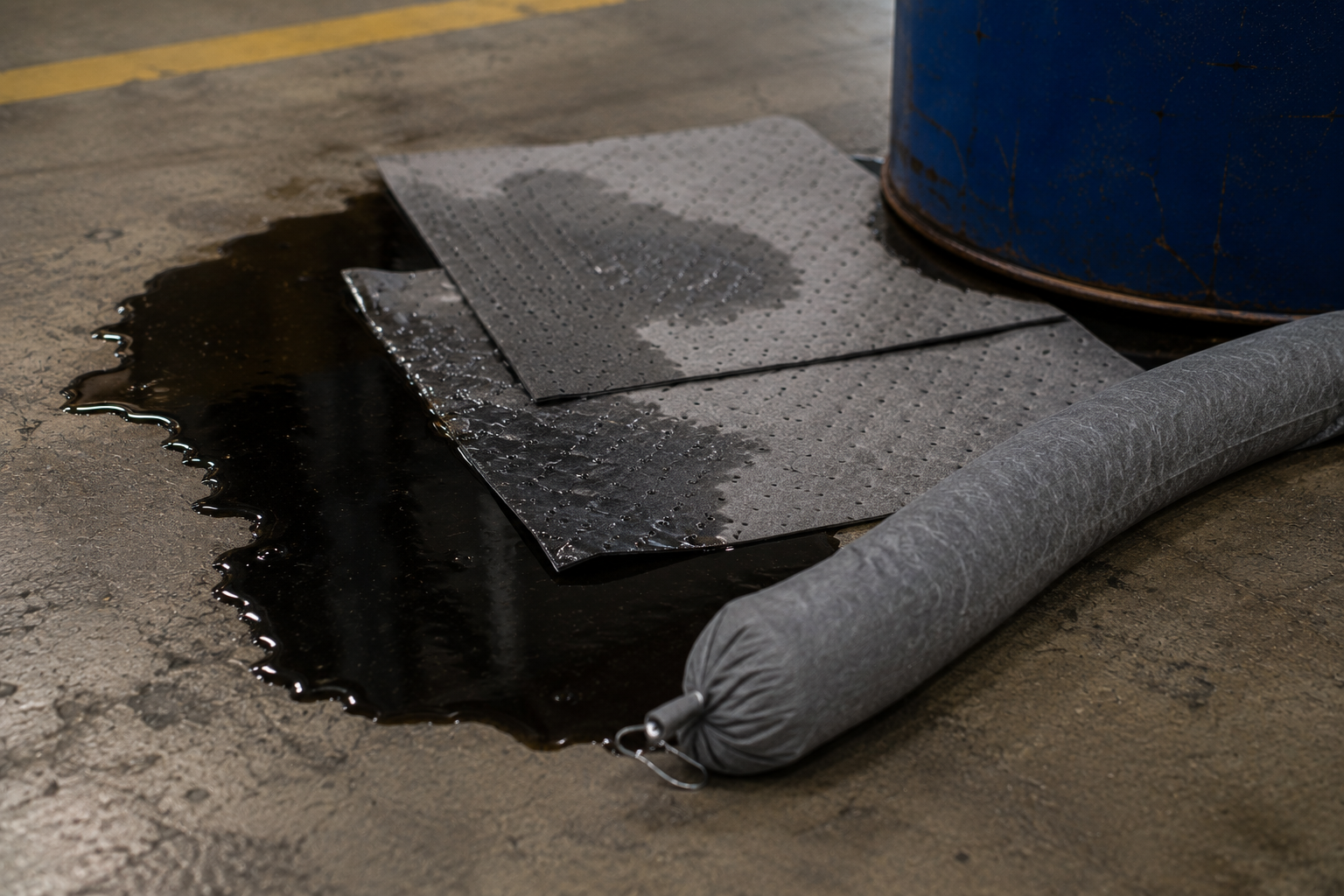
Most facilities understand the importance of spill control, but even well-prepared operations can encounter problems when planning and training are overlooked. Many spill-related costs can be traced back to preventable mistakes rather than the spill itself.
Using the Wrong Absorbent
One of the most common spill control mistakes is selecting the wrong absorbent material. Using an absorbent that is not intended for the spilled liquid can reduce cleanup effectiveness and create unnecessary waste.
How to Avoid It
Train employees on absorbent selection and maintain absorbents that match the liquids handled within the facility.
Choosing an Undersized Spill Kit
A spill kit that lacks sufficient absorbent capacity can quickly become overwhelmed during an incident. This often results in delays while additional supplies are located.
How to Avoid It
Evaluate realistic spill scenarios and select spill kits with adequate capacity for the area they serve.
Ignoring Drain Protection
A spill that reaches a drain can significantly increase cleanup complexity and environmental concerns.
How to Avoid It
Keep drain covers, spill socks, and containment materials readily available near vulnerable drainage areas.
Poor Spill Kit Placement
Response times increase when spill kits are stored too far from the areas where spills are likely to occur.
How to Avoid It
Position spill kits near drum storage areas, maintenance departments, loading docks, and other higher-risk locations.
Failing to Inspect Spill Supplies
Over time, spill kits may become partially used, damaged, or missing components.
How to Avoid It
Inspect kits regularly and replenish materials after every use.
Overlooking Employee Training
Even the best spill control products are ineffective if employees do not know how to use them properly.
How to Avoid It
Conduct periodic spill response training and review facility-specific procedures regularly.
Final Thoughts
Effective spill control requires more than simply purchasing supplies. Proper planning, product selection, placement, inspections, and training all contribute to a faster and more effective response.
Frequently Asked Questions
How often should spill kits be inspected?
Many facilities inspect spill kits regularly as part of their safety programs.
What is the most common spill control mistake?
Using the wrong absorbent is one of the most common and preventable errors.
Why is spill kit placement important?
Quick access to spill response supplies can significantly reduce spill spread and cleanup time.
Explore Spill Control
Share:
Industrial Cleaning Cheat Sheet
Universal, Oil-Only, or Chemical Spill Kits: Which Should You Choose?