
|
THE 30-SECOND VERSION |
• Different jobs require different glove materials.
• Cut resistance, grip, chemical protection, and comfort all matter.
• No single glove is ideal for every application.
• Matching the glove to the hazard improves both safety and productivity.
|
Why the Right Glove Matters |
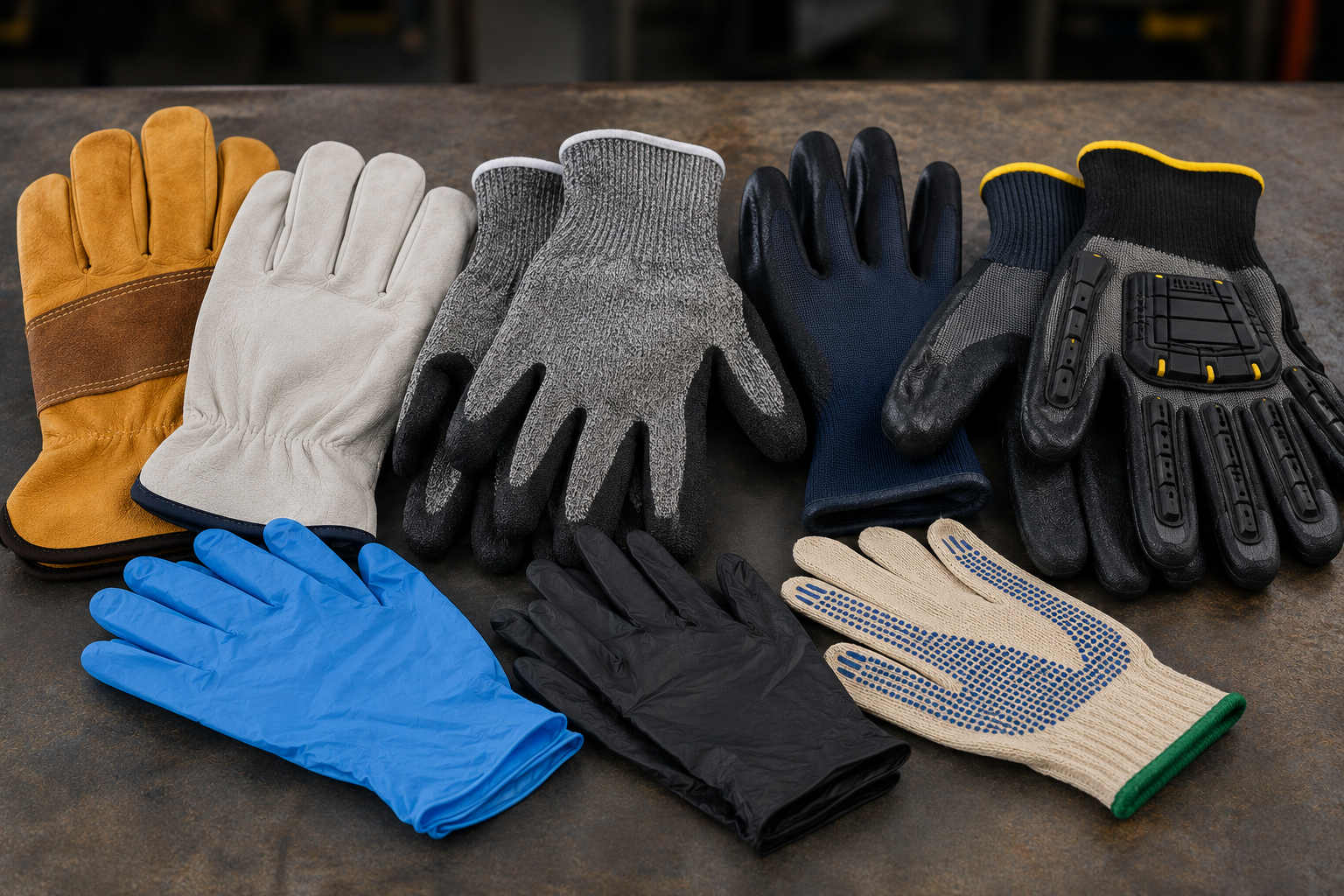
Work gloves protect against cuts, abrasions, chemicals, heat, cold, impacts, and everyday wear. However, using the wrong glove can reduce dexterity, shorten glove life, or leave workers underprotected. Understanding the strengths of each glove type helps purchasing professionals and safety managers make better decisions while improving employee comfort and compliance.
|
Common Types of Work Gloves |
|
Glove Type |
Best For |
Key Benefits |
|
General Purpose |
Material handling, warehouses |
Comfortable, economical |
|
Cut-Resistant |
Manufacturing, sheet metal |
Protects against lacerations |
|
Nitrile-Coated |
Assembly, automotive |
Excellent grip and abrasion resistance |
|
Leather |
Construction, rigging |
Durable and heat resistant |
|
Chemical-Resistant |
Cleaning, chemical handling |
Protects against many liquids and chemicals |
|
Disposable |
Food service, healthcare |
Lightweight and contamination control |
|
Understanding the Options |
||
General Purpose Gloves
Designed for everyday handling tasks where basic hand protection and comfort are the priority.
Cut-Resistant Gloves
Available in multiple ANSI cut levels to help protect workers using knives, sheet metal, or sharp components.
Coated Gloves
Nitrile, polyurethane, and latex coatings improve grip, durability, and abrasion resistance while maintaining dexterity.
Leather Gloves
A dependable option for construction, welding support tasks, and heavy material handling where durability is important.
Chemical-Resistant Gloves
Manufactured from materials selected to resist specific chemicals. Always verify compatibility before use.
Disposable Gloves
Often made from nitrile, latex, or vinyl for short-duration tasks requiring cleanliness or contamination control.
|
Quick Selection Checklist |
✓ Identify the workplace hazard.
✓ Consider grip, dexterity, and comfort.
✓ Choose the proper size.
✓ Replace damaged gloves promptly.
✓ Review ANSI ratings when applicable.
|
Key Takeaway |
The best work glove is the one that matches the specific task and hazard. Balancing protection, comfort, and durability leads to safer and more productive workplaces.
|
Conclusion |
Understanding the different types of work gloves helps organizations choose hand protection that fits both the job and the employee. By selecting gloves based on workplace hazards rather than habit or price alone, businesses can improve safety, extend glove life, and reduce unnecessary replacement costs.
Explore Gloves
Share:
Cut-Resistant Gloves Explained: ANSI A1–A9 Ratings
Nitrile vs. Latex vs. Vinyl Gloves: Which Is Best?