
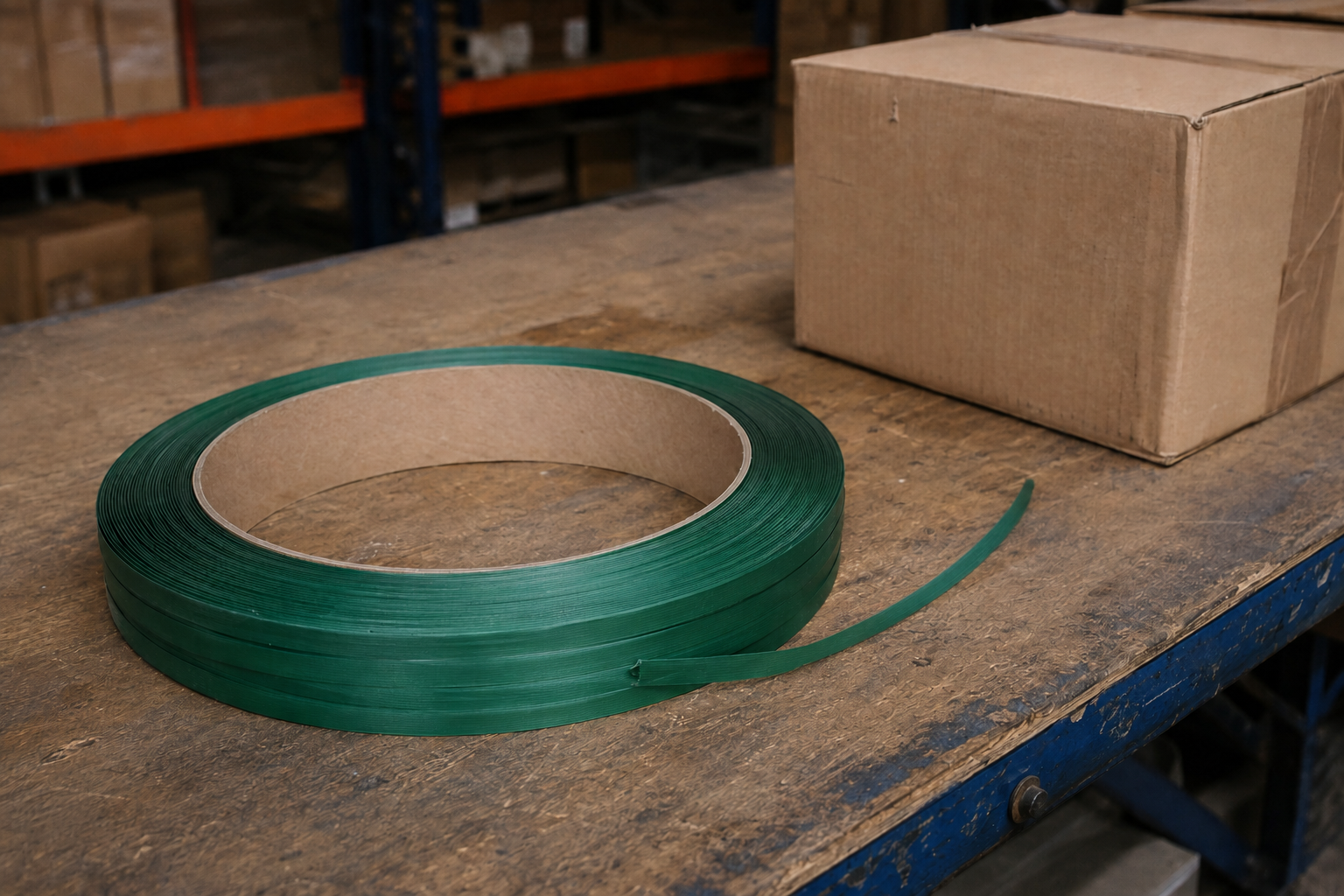
THE 30-SECOND VERSION
1 - Do not select strapping from load weight alone; load shape, movement, strap count, and joint strength also matter.
- Match both strap width and thickness to the tool or machine—not just the nominal width.
- Use hand grade for compatible manual applications and machine grade only where the equipment specifies it.
- Preserve the complete approved specification so future orders are truly interchangeable.
WHY A COMPLETE SPECIFICATION MATTERS
Two coils labeled “1/2-inch strapping” may differ in material, thickness, break strength, length, core, surface, winding, and intended application method. Either difference can change performance or prevent the coil from feeding through existing equipment. Purchasing by width and price alone creates avoidable downtime and inconsistent load containment.
The goal is not to maximize every specification. It is to define a strap that applies consistently, creates the required containment, and survives the expected handling cycle without damaging the load.
USE THIS FIVE-STEP SPECIFICATION PATH
|
1 Define load Weight, shape, settling, edges |
2 Set performance Tension, strength, recovery |
3 Match equipment Width, gauge, grade, core |
4 Validate joint Seal, buckle, weld efficiency |
5 Test shipment Handling, storage, arrival |
Define the load and handling route
Record the total weight, dimensions, center of gravity, rigidity, edge condition, and how the product may settle or expand. Then map the route: conveyor transfers, forklift handling, truck vibration, outdoor storage, temperature swings, and customer unloading. These conditions determine how much movement and shock the strapping system must tolerate.
Determine the required containment—not just total weight
Break strength is the force required to pull new strap apart under a controlled test. It is not the safe working strength of an entire strapped load. The completed joint is usually less efficient than unjoined strap, and real shipments add uneven tension, impact, abrasion, edge loading, and degradation. Never divide pallet weight by the number of straps and treat the result as a sufficient design calculation.
Instead, use a qualified supplier or packaging engineer to establish the required strap performance and safety margin. Consider initial tension, retained tension, elongation, recovery, split resistance, and joint efficiency alongside break strength.
💡 QUICK TIP
Keep one approved sample coil label or photograph with the purchasing specification. It gives buyers and operators a fast reference for material, size, grade, core, coil length, and manufacturer identification when reordering.
WHAT EACH SPECIFICATION TELLS YOU
|
Specification |
What it affects |
Purchasing check |
|
Material |
Stretch, retained tension, corrosion, heat and edge resistance |
PP, PET, regular-duty steel, or high-tensile steel |
|
Width |
Contact area, strength range, seal and tool fit |
Match exact tool or machine capability |
|
Thickness / gauge |
Strength, stiffness, feedability, tool fit |
Confirm the permitted range—not width alone |
|
Break strength |
Laboratory pull-apart limit for new strap |
Use with joint efficiency and an engineered safety margin |
|
Grade |
Manual or machine handling characteristics |
Specify hand grade, machine grade, regular duty, or high tensile |
|
Core / winding |
Fit on dispenser or machine and feeding behavior |
Record core dimensions, coil width, and ribbon or oscillated wound |
|
Finish / surface |
Friction, sealing, corrosion and feeding |
Match approved finish, embossing, wax, or coating |
WIDTH, THICKNESS, AND STRENGTH MUST BE READ TOGETHER
Wider strap spreads clamping force over more surface and often supports a higher strength range, which can help protect softer packaging. Thickness also contributes to strength and stiffness. However, increasing either dimension can make a strap incompatible with a tensioner, sealer, dispenser, or machine track. The dimensions printed on the tool or equipment manual are firm compatibility limits.
If a load needs more containment, the answer is not automatically a wider or thicker strap. A different material, stronger grade, additional strap, improved strap placement, better edge protection, or a more efficient joint may solve the problem more effectively. Changes should be evaluated as a system and verified in testing.
UNDERSTAND GRADE AND APPLICATION METHOD
Hand-grade polypropylene
Hand-grade polypropylene is formulated and wound for manual application with compatible tensioners, sealers, buckles, or combination tools. Buy Right’s current hand-grade example is 1/2 inch wide, supplied on a 16-by-6-inch core, and rated at 500 pounds break strength. Those details belong together; they should not be separated when reordering.
Machine-grade polypropylene
Machine-grade strap is designed to feed, tension, seal, and cut through specified equipment. Coil dimensions, camber, stiffness, surface, and consistency can matter as much as nominal break strength. Check the machine manual and approved strap range before switching supplier, width, thickness, or coil configuration.
Regular-duty and high-tensile steel
Regular-duty steel covers many rigid industrial loads. High-tensile steel is heat-treated for more demanding applications and higher break-strength requirements. They are not interchangeable simply because the width matches. For example, Buy Right’s high-tensile offering is 1-1/4 by .031 inch, ribbon wound, painted and waxed, with an approximate break strength of 6,000 pounds; its tools and use case must match that specification.
BUILD A REORDER-READY SPECIFICATION
1. Material and grade: polypropylene hand grade, polypropylene machine grade, polyester, regular-duty steel, or high-tensile steel.
2. Exact width and thickness or gauge, including the permitted tolerance when supplied by the manufacturer.
3. Minimum break strength and any required retained-tension or elongation performance.
4. Coil length or weight, core inside diameter, core width, and winding style.
5. Color, finish, embossing, coating, or wax requirements.
6. Approved closure, joint type, tool model, machine, and operating settings.
7. Required edge protection, strap count, placement pattern, and inspection criteria.
CONCLUSION
A dependable strapping specification connects load behavior to material performance and then connects the strap to the application equipment. Width, thickness, break strength, grade, core, winding, finish, and closure all affect whether the system will work consistently.
Once testing confirms the configuration, record the entire specification and control substitutions. That discipline prevents a seemingly minor purchasing change from becoming a feeding problem, weak joint, damaged package, or unstable shipment.
KEY TAKEAWAY
Specify the complete strapping system, not a single number. The right strap must provide the required containment, fit the available equipment, form a reliable joint, and remain effective throughout actual shipping conditions.
Explore Strapping
Share:
How to Prevent Strapping, Seal, and Tool Compatibility Problems
Polypropylene vs. Polyester vs. Steel Strapping: Which Is Best?