
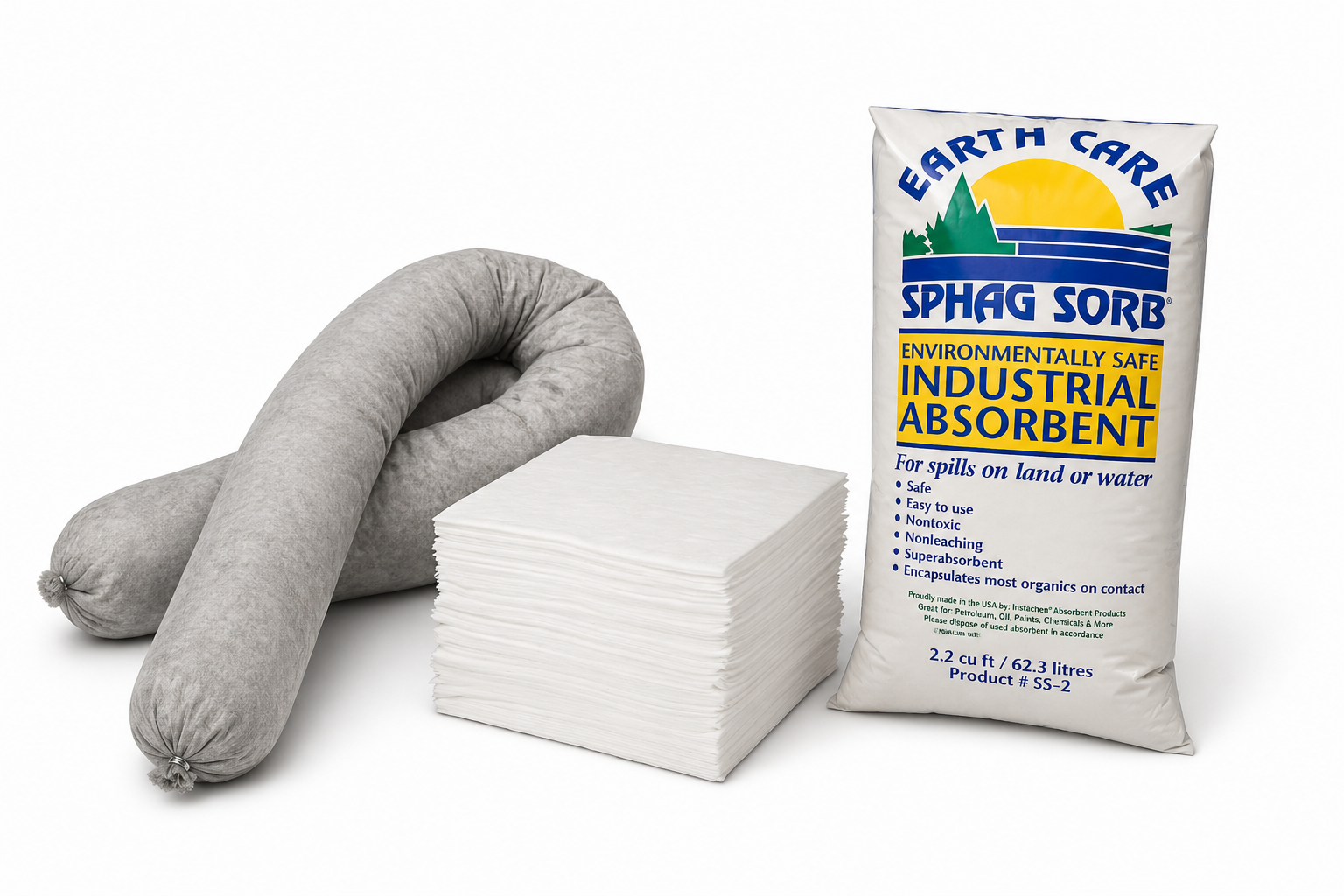
When a spill occurs, having the right absorbent on hand can make cleanup faster, safer, and more effective. However, not all absorbents are designed for the same liquids or applications. Choosing the wrong absorbent can slow down cleanup efforts, increase waste, and create additional safety concerns.
Understanding the different types of spill absorbents and when they should be used can help facilities respond more efficiently while reducing the risk of slips, contamination, and environmental issues.
Types of Spill Absorbents
Most absorbent products fall into one of three categories: universal absorbents, oil-only absorbents, and chemical absorbents.
Universal absorbents are designed to handle many common industrial liquids, including water, coolants, lubricants, and hydraulic fluids. Because they work with a variety of liquids, they are often used in warehouses, manufacturing facilities, maintenance shops, and general industrial environments.
Oil-only absorbents are designed to absorb petroleum-based liquids while repelling water. This makes them particularly useful outdoors or around waterways where rainwater or standing water may be present.
Chemical absorbents, sometimes referred to as hazmat absorbents, are intended for spills involving aggressive chemicals or unknown liquids. Compatibility should always be reviewed before using absorbents on hazardous substances.
Choosing the Right Absorbent Format
The absorbent material itself is only part of the decision. The product format also plays an important role in spill response.
Pads are commonly used for cleaning up small spills and leaks. Rolls provide continuous coverage over larger areas and are frequently used along walkways, production lines, and maintenance areas. Socks help contain spills and prevent liquids from spreading, while absorbent pillows are often used where larger volumes of liquid need to be collected in a concentrated area.
Factors to Consider
Before selecting an absorbent, consider:
• The type of liquid involved
• Whether the spill is indoors or outdoors
• The size of the spill
• Nearby drains or environmentally sensitive areas
• Whether containment is needed before cleanup begins
Final Thoughts
The best absorbent is the one that matches both the liquid and the situation. Understanding the differences between absorbent types and formats can help facilities improve safety, streamline cleanup efforts, and reduce downtime.
Frequently Asked Questions
What are universal absorbents used for?
Universal absorbents are commonly used for water-based liquids, oils, coolants, and many routine industrial fluids.
Can oil-only absorbents absorb water?
No. Oil-only absorbents are designed to repel water while absorbing petroleum-based liquids.
When should absorbent socks be used?
Absorbent socks are typically used to contain spills and prevent liquids from spreading during cleanup.
Explore Spill Control
Share:
Spill Pads vs Spill Socks vs Spill Booms vs Spill Rolls: What's the Difference?
NRR Cheat Sheet