
|
THE 30-SECOND VERSION |
|
Why Your Container Choice Matters |
Commercial food storage containers do far more than hold ingredients. The right container protects food quality, supports food safety programs, improves organization, and helps employees work faster. Choosing solely on price often leads to broken containers, wasted storage space, mismatched lids, and unnecessary replacement costs.
|
Start with What You're Storing |
||
|
Food Type |
Recommended Container |
Why |
|
Dry ingredients |
Airtight square |
Maximizes shelf space |
|
Prepared foods |
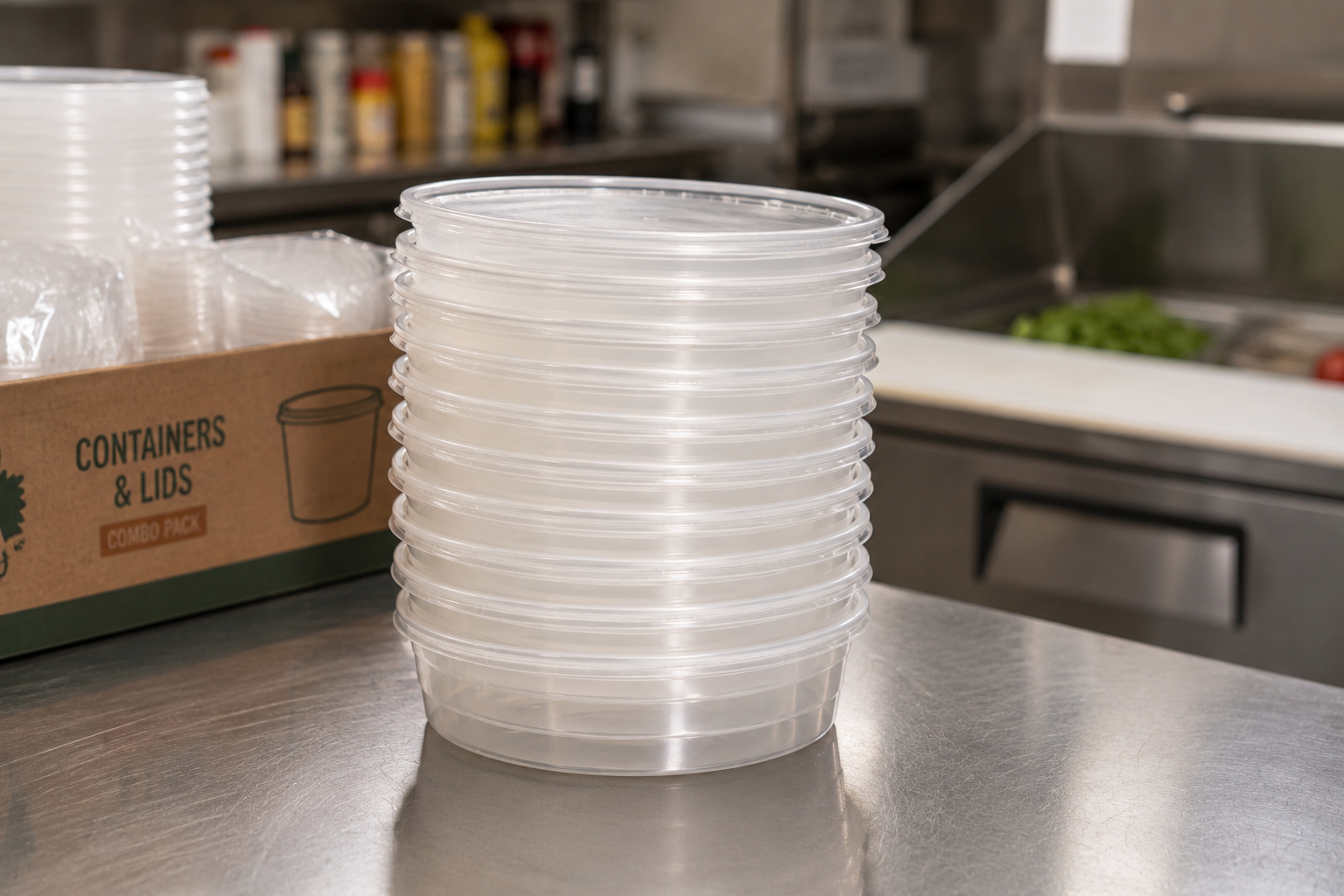
Clear round |
Easier identification, stirring, and cleaning |
|
Liquids |
Round with tight lid |
Reduces spills |
|
Bulk ingredients |
Large stackable |
Improves inventory |
|
Decision Factors |
||
· Material: Polycarbonate/polypropylene for durability and food safety.
· Shape: Square saves space; round is easier to stir and clean.
· Size: Standardize to reduce lid confusion.
· Transparency: Clear containers speed inventory checks.
· Lids: Tight-fitting lids protect freshness and reduce spills.
|
COMMON MISTAKE |
|
|
Quick Decision Guide |
|
|
Question |
Recommendation |
|
Limited shelf space? |
Choose square stackable containers. |
|
Need fast identification? |
Use clear containers with labels. |
|
Storing hot foods? |
Verify heat-rated materials. |
|
High-volume prep? |
Use standardized container families. |
|
Frequently Asked Questions |
|
Is square or round better? Square is generally more space-efficient, while round is often easier to clean and mix in.
Should all containers be clear? Clear containers improve visibility, though opaque containers can be useful for light-sensitive products.
How many sizes should we stock? Most facilities benefit from standardizing a limited range of commonly used sizes.
|
KEY TAKEAWAY |
|
Conclusion |
Selecting food storage containers strategically helps facilities reduce waste, improve organization, support food safety, and streamline daily operations. Evaluate what you store, how employees use it, and how much space you have before purchasing. A standardized, durable container system often pays for itself through improved efficiency and fewer replacements.
Explore Containers and Lids
Share:
7 Takeout Packaging Mistakes That Hurt Food Quality (And How to Fix Them)
Acrylic vs. Hot Melt Tape: Which Should You Choose?