

|
THE 30-SECOND VERSION |
|
✓ Start with the material and the type of finished edge the work requires. ✓ Confirm roll width, outside diameter, core size and weight before comparing models. ✓ Choose capacity for normal demand—not the largest configuration available. ✓ Match countertop, wall-mounted, freestanding or mobile equipment to the actual workflow. ✓ Evaluate loading, cutting, reach and replacement parts as part of ownership cost. |
|
START WITH THE JOB, NOT THE EQUIPMENT |
A classroom cutting bulletin-board paper, a restaurant dispensing food film and a warehouse cutting foam all handle rolled material, but their operating demands are different. Define what must happen at the station: how often material is used, how accurately it must be cut, who handles it and where the finished piece goes next.
Observe several real work cycles before choosing equipment. Note where the roll is stored, how far the operator reaches, where material is measured and whether a second person is needed to control the roll. These details reveal whether the main need is better cutting, safer support, faster access or higher capacity.
|
MATCH THE CUTTER TO THE MATERIAL |
Straight-edge cutters are well suited to paper and other materials that tear predictably against a smooth bar. Serrated edges grip and initiate a cut in tougher films, foil and flexible materials. Razor and rotary systems are used when clean, controlled cuts are important for foam, bubble, film or similar packaging media.
The material should feed without excessive drag, bunching or sideways movement. If several materials share a station, verify that the chosen cutting system handles each one rather than assuming a universal cutter will perform equally well.
|
Material |
Typical requirement |
Useful starting point |
|
Kraft or art paper |
Fast, repeatable tear |
Straight-edge dispenser |
|
Film or foil |
Positive cut initiation |
Serrated edge |
|
Foam or bubble |
Controlled, square cut |
Razor or rotary system |
|
Gift wrap or cello |
Clean presentation |
Supported roll with suitable cutter |
|
CONFIRM CAPACITY AND COMPATIBILITY |
Record four roll measurements: width, outside diameter, core diameter and loaded weight. Width determines usable cutting span. Outside diameter affects clearance. Core diameter determines whether the roll fits the spindle or adapters. Weight affects frame strength, mobility and safe loading.
Plan for the rolls the facility actually buys, including supplier variations. A unit that barely fits today’s roll may become unusable after a specification change. Leave reasonable clearance, but avoid buying unused capacity that consumes workspace.
|
💡 QUICK TIP Keep one sample roll or a verified specification sheet beside the equipment-selection record so future substitutions can be checked quickly. |
|
CHOOSE THE RIGHT INSTALLATION STYLE |
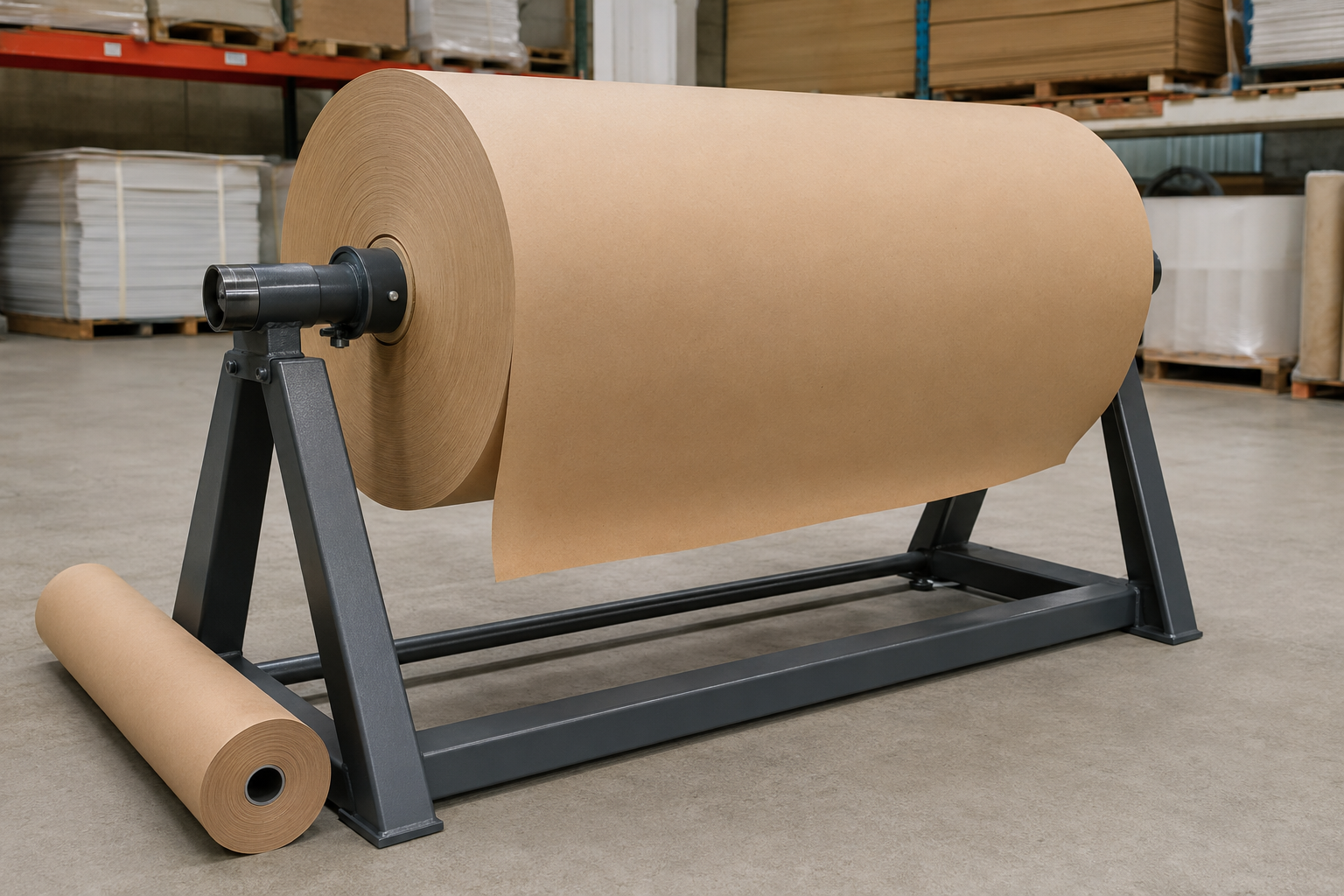
Countertop units keep material close to the task and can be moved when the surface must be cleared. Wall-mounted units preserve worktop space but require a suitable mounting surface and a comfortable reach. Freestanding racks provide greater capacity and flexibility. Mobile units make sense when rolls serve multiple stations or when large material must be positioned beside the work.
Placement should keep the roll within the operator’s normal reach while leaving room for material to travel straight through the cutter. Do not place frequently used equipment where doors, carts or coworkers interrupt the motion.
|
Setup |
Best fit |
Watch for |
|
Countertop |
Light-to-moderate use |
Lost work surface |
|
Wall-mounted |
Fixed, compact station |
Wall strength and reach |
|
Freestanding |
Multiple or heavier rolls |
Floor footprint |
|
Mobile |
Shared or changing work |
Caster stability |
|
EVALUATE THE COMPLETE WORK CYCLE |
Loading matters as much as cutting. Consider who lifts the roll, whether the spindle is easy to remove and whether core adapters are needed. The operator should be able to pull material smoothly, see or measure the cut line and complete the cut without twisting.
Also review blade replacement, cleaning and access to wear parts. Durable equipment still requires inspection. A simple maintenance routine protects cut quality and prevents operators from compensating for dull or damaged components with extra force.
|
MAKE THE FINAL DECISION |
Shortlist only equipment that passes the compatibility check. Then compare the remaining options using workflow fit, safety, maintainability and total operating cost. Testing with the facility’s actual material is the clearest way to identify drag, uneven feeding or an unsuitable edge before standardizing across several locations.
Document the approved roll specifications, equipment model and installation method. This gives purchasing and maintenance teams a shared reference when materials, suppliers or replacement parts change. For multi-site operations, validate one station first and capture operator feedback before repeating the setup.
|
⚠ COMMON MISTAKE Choosing by advertised roll width alone → outside diameter, core size and loaded weight are overlooked → record all four measurements and verify them against the equipment specification. |
|
CONCLUSION |
A roll dispenser or cutter earns its place by making routine work more controlled, repeatable and practical. A disciplined selection process reduces fit surprises, protects workspace and gives operators equipment that works with the material rather than against it.
|
✓ KEY TAKEAWAY Choose from the material outward: required cut, roll dimensions, operating volume, installation style and maintenance access should all support the same workflow. |
Explore Equipment
Share:
Straight-Edge vs. Serrated Cutters: Which Is Right for Your Material?
How Much Protective Packaging Does Your Shipment Actually Need?