

|
⏱ THE 30-SECOND VERSION |
What OSHA Actually Requires
OSHA's Personal Protective Equipment standards require employers to perform a hazard assessment and provide suitable eye and face protection whenever employees are exposed to flying particles, molten metal, liquid chemicals, acids, caustic liquids, chemical gases or vapors, or potentially harmful light radiation. OSHA does not simply require 'safety glasses everywhere'; it requires protection appropriate for the identified hazard.
The Role of ANSI Z87.1
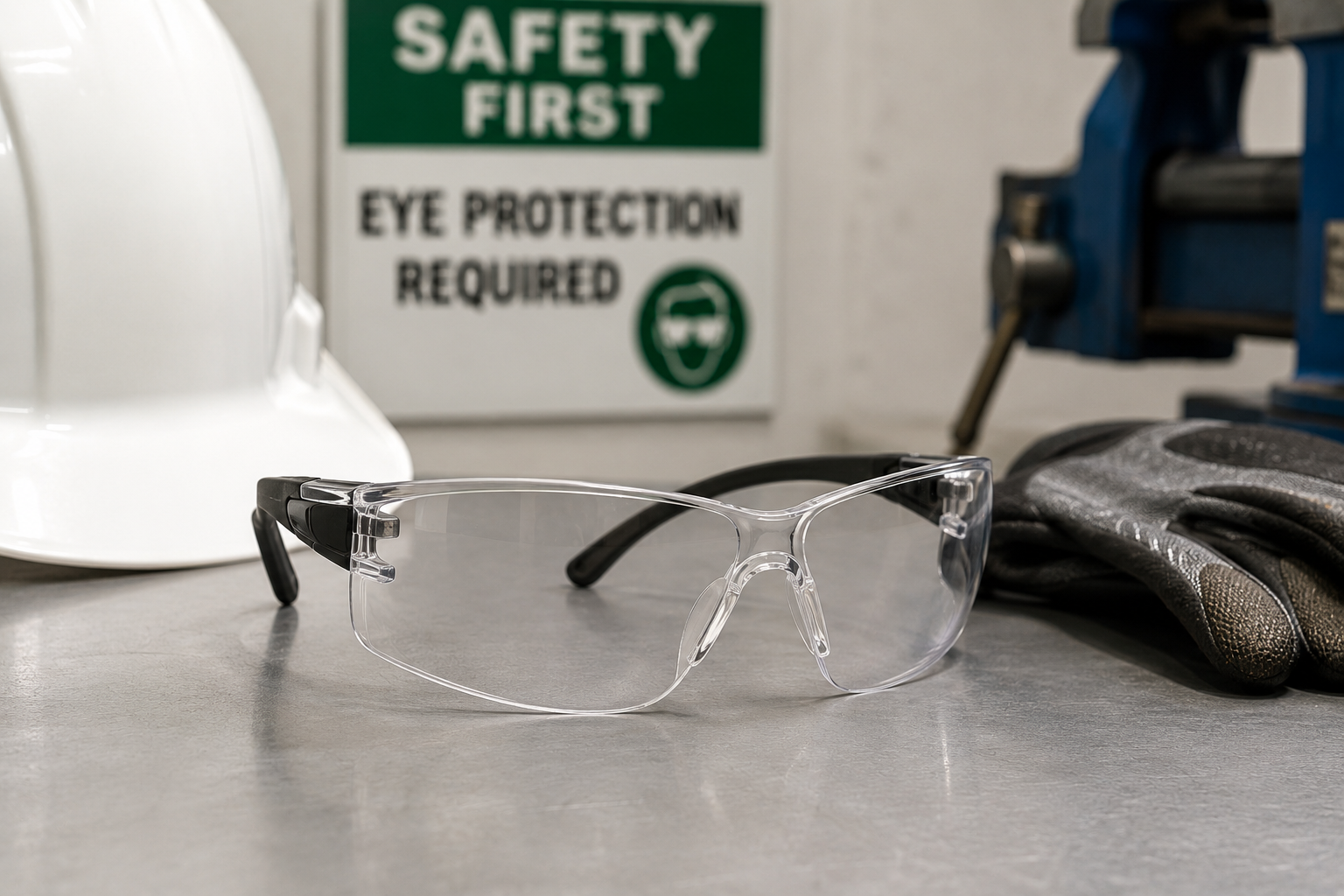
OSHA commonly references ANSI Z87.1 because it establishes performance requirements for occupational eye and face protection. Eyewear marked Z87 or Z87+ has been tested to defined performance criteria. The '+' designation indicates high-impact performance for qualifying products. Purchasing compliant products makes demonstrating compliance much easier during inspections.
Employer Responsibilities
Employers must conduct documented hazard assessments, select appropriate PPE, ensure employees use it correctly, maintain equipment in serviceable condition, and train workers on when, where, and how eye protection is required. Prescription lens users must also be protected through prescription safety eyewear or approved over-the-glass options.
Employee Responsibilities
Employees should wear assigned eye protection consistently, inspect it before use, clean lenses properly, report damage, and replace scratched or cracked eyewear that could reduce visibility or protection.
Common Workplace Hazards
|
Hazard |
Recommended Protection |
Examples |
|
Flying debris |
ANSI safety glasses |
Grinding, drilling, machining |
|
Chemical splash |
Chemical goggles |
Cleaning, chemical transfer |
|
Dust |
Sealed goggles |
Woodworking, cement |
|
Radiant energy |
Specialized filters |
Welding, cutting |
|
⚠ Common Mistake |
||
Hazard Assessment Checklist
✓ Identify every eye hazard by task
✓ Match PPE to each hazard
✓ Verify ANSI markings
✓ Train employees
✓ Replace damaged eyewear promptly
✓ Reassess when processes change
|
💡 Quick Tip |
|
ℹ Did You Know? |
Conclusion
OSHA compliance is ultimately about reducing injury risk through hazard-based PPE selection, employee training, and consistent enforcement. Choosing ANSI-rated eye protection that matches the actual work being performed protects employees and helps organizations demonstrate compliance during audits or inspections.
|
✅ Key Takeaway |
Explore Eye Protection
Share:
Safety Cones, Barricades or Floor Signs: Which Should You Use?
Why Regular Glasses Aren’t a Substitute for Safety Glasses