
|
⏱ THE 30-SECOND VERSION |
Why the Difference Matters
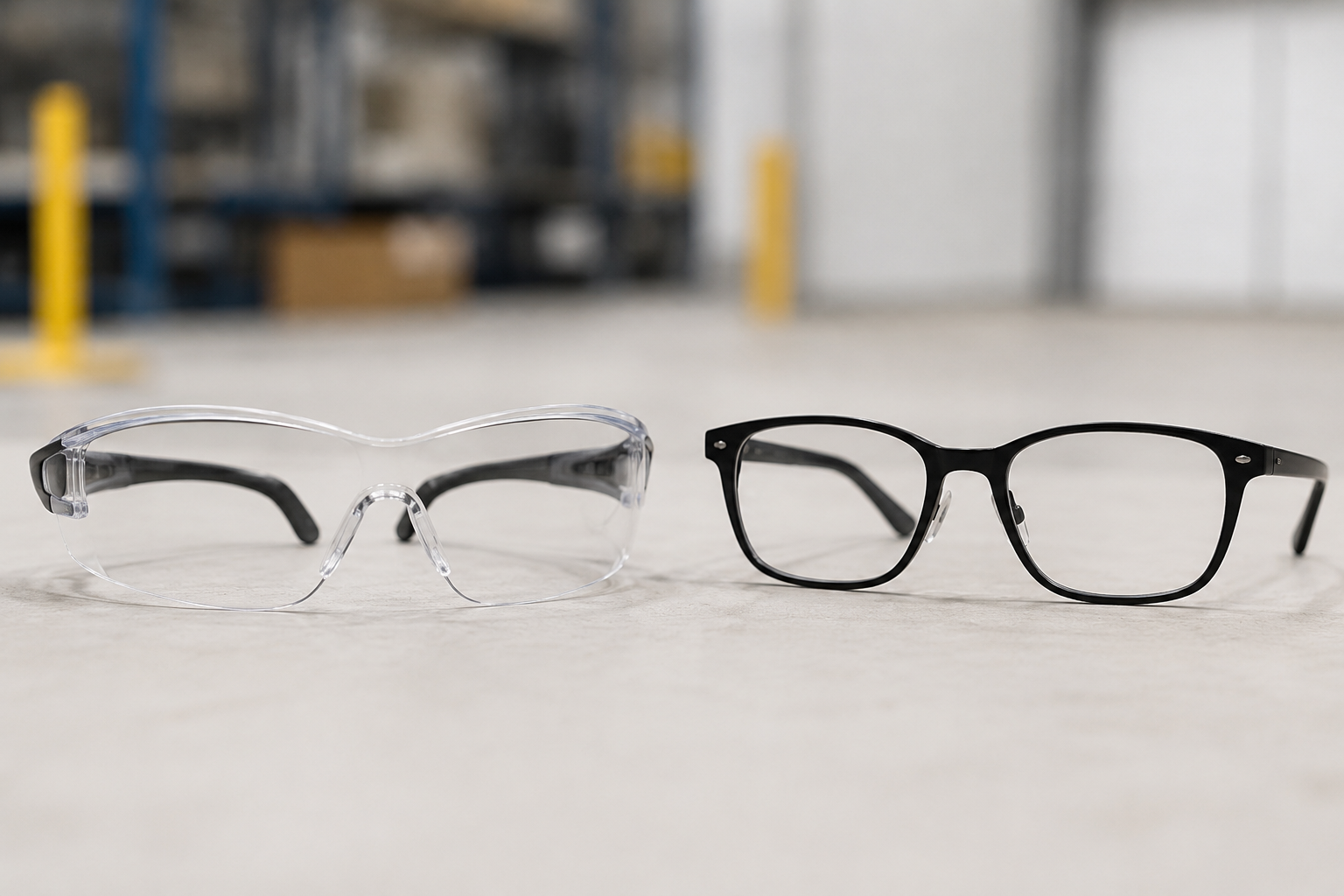
Many workers assume that because prescription glasses cover the eyes they provide adequate protection. In reality, everyday eyewear is designed to improve vision, not resist flying debris, chemical splashes, or impact. A broken lens or frame can become part of the hazard instead of preventing it.
What Makes Safety Glasses Different
ANSI Z87.1 safety glasses are tested for impact resistance, lens retention, frame durability, and other performance requirements. They are manufactured using materials such as polycarbonate and often include integrated side shields to protect from hazards approaching from multiple angles.
Key Differences
|
Feature |
Regular Glasses |
Safety Glasses |
|
Primary purpose |
Vision correction |
Eye protection + vision |
|
Impact tested |
No |
Yes (ANSI Z87.1) |
|
Side protection |
Usually none |
Often built in |
|
Workplace use |
Office/general |
Industrial environments |
|
💡 Quick Tip |
||
When Prescription Glasses Are Acceptable
Prescription glasses are appropriate in offices and other low-hazard environments. Once work involves grinding, cutting, drilling, chemicals, compressed air, or flying particles, appropriate eye protection should be worn according to the hazard assessment.
|
⚠ Common Mistake |
Choosing the Right Eye Protection
Start with the hazards present. Impact hazards require ANSI-rated safety glasses. Chemical splash hazards may require goggles. Outdoor work may benefit from tinted lenses, while indoor work typically uses clear lenses. Anti-fog and anti-scratch coatings can improve comfort and longevity.
Simple Decision Framework
1. Identify the hazard.
2. Verify required PPE.
3. Select ANSI-rated eye protection.
4. Ensure proper fit.
5. Replace damaged eyewear promptly.
|
Did You Know? |
Conclusion
Regular glasses and safety glasses serve different purposes. Vision correction alone does not protect against workplace hazards. Selecting ANSI-rated eye protection that matches the risks of the job helps reduce injuries, supports compliance, and protects employees from preventable incidents.
|
✅ Key Takeaway |
Explore Eye Protection
Share:
OSHA Eye Protection Requirements Explained
How Often Should You Inspect and Restock a Workplace First Aid Kit?