
|
THE 30-SECOND VERSION · Choose by required type and performance class first; garment style comes second. · Shirts are useful for all-shift wear and can provide more consistent torso or sleeve coverage. · Vests are easier to issue, share and layer over uniforms or changing weather gear. · In either case, the garment must fit, close properly and remain uncovered and serviceable. |
|
THE CORE DIFFERENCE |
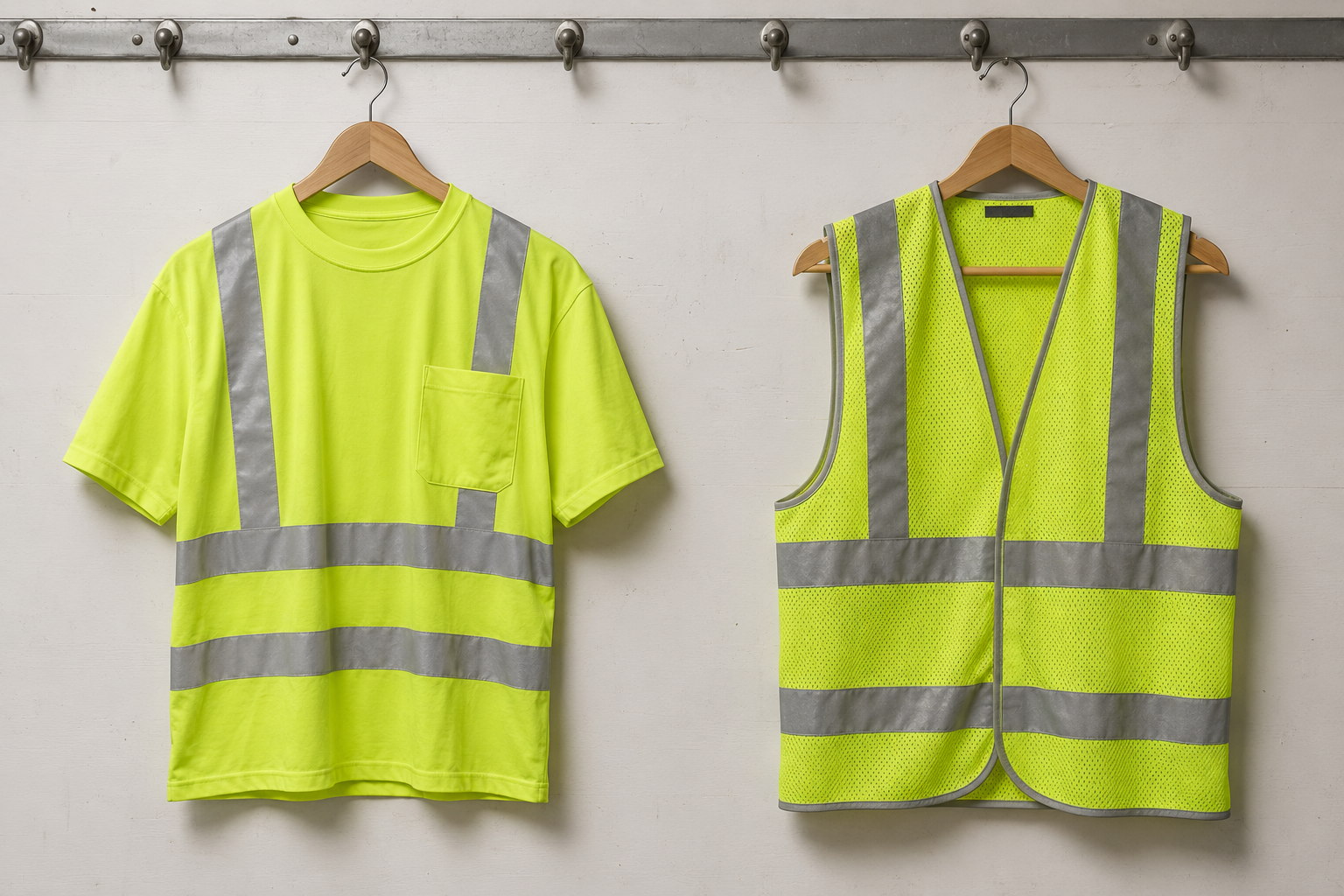
A high-visibility shirt combines workwear and visibility into one garment. A safety vest is an outer visibility layer worn over a shirt, uniform, jacket or coverall. Both can incorporate fluorescent background material and retroreflective bands, but neither is compliant merely because it is bright. The label, garment design and applicable standard determine its type and performance class.
The decision is often operational. Managers must consider what employees already wear, how often layers change, how garments will be issued and laundered, and whether workers are likely to remove the visibility layer during the shift.
|
SIDE-BY-SIDE COMPARISON |
|
Factor |
High-visibility shirt |
Safety vest |
|
Daily comfort |
Functions as the primary shirt; moisture-wicking options can be comfortable for long wear. |
Adds another layer, although mesh styles can reduce heat buildup. |
|
Layering |
May be covered by a jacket or sweatshirt, reducing visibility. |
Can be moved to the outside as layers change. |
|
Coverage |
Sleeved designs can provide more visible area and better body definition. |
Typically concentrates visible material on the torso. |
|
Issuing |
Usually assigned by employee and laundered like workwear. |
Simple to stock by size, issue to visitors and keep as spares. |
|
Task features |
Fewer bulky pockets; less loose layering around the torso. |
Available with pockets, breakaway points and multiple closures. |
|
Replacement |
Wear, stains and laundering affect both workwear and visibility at once. |
Can be replaced independently of the uniform underneath. |
|
WHEN A SAFETY SHIRT IS THE BETTER FIT |
· Employees need visibility throughout most or all of the shift.
· Hot conditions make an extra outer layer undesirable.
· The work involves frequent bending or movement where a loose vest may shift.
· Sleeved coverage helps the worker’s human shape stand out.
· The company can control laundering, sizing and seasonal uniform changes.
A shirt can reduce the “forgotten vest” problem because visibility is built into the daily uniform. However, supervisors must plan for outerwear. If a sweatshirt, rain shell or jacket covers the high-visibility material, the system no longer performs as intended. Approved high-visibility outer layers or a vest worn over the top may still be necessary.
|
WHEN A SAFETY VEST IS THE BETTER FIT |
· Workers already have uniforms or protective clothing that should remain in use.
· Visibility is needed only in designated zones or for part of the shift.
· Visitors, contractors or temporary employees need an easily issued outer layer.
· Weather changes require workers to add or remove clothing.
· Roles benefit from surveyor pockets, identification colors or breakaway features.
|
ⓘ DID YOU KNOW? Retroreflective material is designed to return light toward its source, helping drivers or equipment operators detect a worker under low-light conditions. Fluorescent background material primarily improves daytime conspicuity. |
|
USE A SIMPLE DECISION PATH |
|
If this describes the work… |
Start by evaluating… |
|
Visibility is required for the full shift in warm conditions. |
A breathable safety shirt with the necessary labeled performance. |
|
Employees move between office and active vehicle areas. |
A vest that can be donned at the controlled entry point. |
|
Workers add coats or rain gear during the shift. |
A vest or compliant outer garment that stays on the outside. |
|
A high-hazard exposure requires greater body definition. |
A sleeved garment or ensemble meeting the required class. |
|
Visitors need short-term visibility. |
Clearly sized, easy-to-inspect loaner vests. |
|
💡 QUICK TIP Run a one-week wear trial with representative employees. Check whether garments remain closed, visible and comfortable during actual bending, lifting, driving and layering—not just while standing still. |
|
DO NOT OVERLOOK SHARED LIMITATIONS |
Both shirts and vests lose effectiveness when they are faded, dirty, damaged, poorly fitted or hidden. Reflective bands should not be covered by backpacks, harness components or equipment unless the overall approved system accounts for it. Follow the garment manufacturer’s washing and drying instructions because harsh cleaning or excessive cycles can degrade performance.
High-visibility apparel also does not control vehicle movement. Sites still need appropriate pedestrian routes, barriers, lighting, spotter practices, speed controls, alarms, communication and training. Apparel helps a worker be detected; it does not guarantee the driver has time or space to stop.
|
BUYING CHECKLIST |
· Confirm the hazard assessment and applicable requirement.
· Verify the garment label, type and performance class.
· Order sizes based on real measurements and expected layers.
· Evaluate heat stress, weather and laundering logistics.
· Check compatibility with every other required PPE item.
· Define inspection, replacement and spare-stock procedures.
|
✓ KEY TAKEAWAY Choose safety shirts for integrated, consistent wear and vests for flexible outer-layer visibility. If the risk assessment requires specific performance, select the labeled garment first—then decide which format employees can keep visible and wear correctly. |
|
CONCLUSION |
There is no universal winner between a safety shirt and a vest. A shirt may improve comfort and consistency for an all-day crew, while a vest may simplify layering, visitors and intermittent exposure. The strongest program may use both, assigning each to the conditions it handles best while maintaining one clear standard for required visibility performance.
Explore Shirts and Vests
Share:
When Should Workers Wear High-Visibility Safety Apparel?
How to Choose the Right Safety Vest for Your Jobsite