
THE 30-SECOND VERSION
-
Disposable cutlery weight describes its general strength and rigidity—not its physical weight alone.
-
Medium-weight cutlery is practical for lighter foods, breakrooms, sampling, and cost-conscious service.
-
Heavy-weight cutlery provides greater strength for takeout meals, catering, cafeterias, and everyday restaurant service.
-
Extra-heavy cutlery is best suited to dense foods, firmer textures, and applications where presentation matters.
-
Forks, knives, and spoons should be selected around the foods being served.
-
Color, style, packaging quantity, and storage requirements also affect the best choice.
-
Test cutlery with the actual menu before placing a large order.
WHY DISPOSABLE CUTLERY WEIGHT MATTERS
Disposable forks, knives, and spoons may look similar online, but they can perform very differently during a meal. Cutlery that is too light may bend, flex, or break. Choosing a heavier option than the food requires can increase costs without providing a meaningful benefit.
The goal is not always to purchase the strongest disposable cutlery available. It is to choose the lightest grade that can reliably handle the menu, service environment, and customer expectations.
BuyRight Supply offers medium-, heavy-, and extra-heavy-weight cutlery for a range of food-service applications. Understanding the differences can help restaurants, caterers, offices, schools, healthcare facilities, and event planners make a more practical choice.
WHAT DOES CUTLERY WEIGHT MEAN?
Terms such as medium weight, heavy weight, and extra heavy weight generally describe the utensil’s relative thickness, rigidity, and resistance to bending.
These categories are useful for comparison, but they are not universal measurements. Two manufacturers may use slightly different constructions within the same weight class. Handle design, utensil shape, material, and food temperature can also affect performance.
| Cutlery Grade | General Performance | Common Applications |
|---|---|---|
| Medium weight | Lightweight with moderate flexibility | Snacks, desserts, samples, breakrooms, and lighter meals |
| Heavy weight | Greater rigidity and dependable everyday performance | Takeout, catering, cafeterias, restaurants, and complete meals |
| Extra heavy weight | Highest rigidity and a more substantial feel | Dense foods, banquet service, special events, and presentation-focused meals |
Use the weight classification as a starting point, then test the utensil with the actual foods and containers used in your operation.
WHEN TO CHOOSE MEDIUM-WEIGHT CUTLERY
Medium-weight disposable cutlery is a cost-effective choice when meals do not require significant cutting or pressure.
It may be appropriate for:
-
Yogurt and soft desserts
-
Fruit cups
-
Light salads
-
Cake and pastries
-
Snacks and samples
-
Office breakrooms
-
Beverage stations
-
Short-duration events
Medium-weight cutlery can help control costs in high-volume settings, especially when many customers only need a utensil for a small portion or soft food.
However, it may not be the best choice for dense entrées, firm vegetables, frozen desserts, or foods that require force to cut or pierce.
WHEN TO CHOOSE HEAVY-WEIGHT CUTLERY
Heavy-weight cutlery offers a stronger, more rigid feel while remaining practical for everyday commercial service.
This grade is commonly used for:
-
Restaurant takeout
-
Catered meals
-
Cafeteria service
-
Deli entrées
-
Pasta dishes
-
Rice and grain bowls
-
Cooked vegetables
-
Office lunches
-
School and institutional dining
For many businesses, heavy-weight cutlery provides the most versatile balance of strength, customer experience, and cost. It can handle a wider variety of foods without automatically moving to the highest-priced option.
WHEN EXTRA-HEAVY CUTLERY MAKES SENSE
Extra-heavy disposable cutlery is designed for applications that require more rigidity or a more substantial presentation.
Consider extra-heavy cutlery for:
-
Dense or firm entrées
-
Thick cuts of meat
-
Hearty catered meals
-
Banquets and receptions
-
Premium takeout orders
-
Special events
-
Meals served in sturdy reusable-looking disposable dinnerware
The heavier construction can create a more polished dining experience, particularly when the cutlery is paired with higher-end plates, bowls, or trays.
Extra-heavy cutlery is not necessary for every order. It provides the most value when the menu or service style genuinely benefits from the added strength and appearance.
MATCH THE UTENSIL TO THE FOOD
Weight is only one part of disposable cutlery selection. Each utensil must also perform the task required by the meal.
Forks
Forks should be rigid enough to pierce and lift the food without the tines bending. Light desserts and salads may work with medium-weight forks, while meats, dense pasta dishes, and firmer vegetables may require a heavier option.
Knives
Disposable knives should be evaluated by both rigidity and cutting-edge design. A heavier knife may provide better control, but the blade still needs the appropriate shape and edge for the food.
Test knives against the firmest menu item customers are expected to cut.
Spoons
Spoons must support the weight and consistency of the food. Medium-weight spoons may work well for cereal, pudding, and soft desserts. Soups, chili, dense side dishes, and frozen foods may benefit from a more rigid spoon.
For ice cream or other frozen products, test the spoon at the actual serving temperature. Cold, firm foods can place considerably more stress on a utensil than softer foods.
COLOR AND PRESENTATION
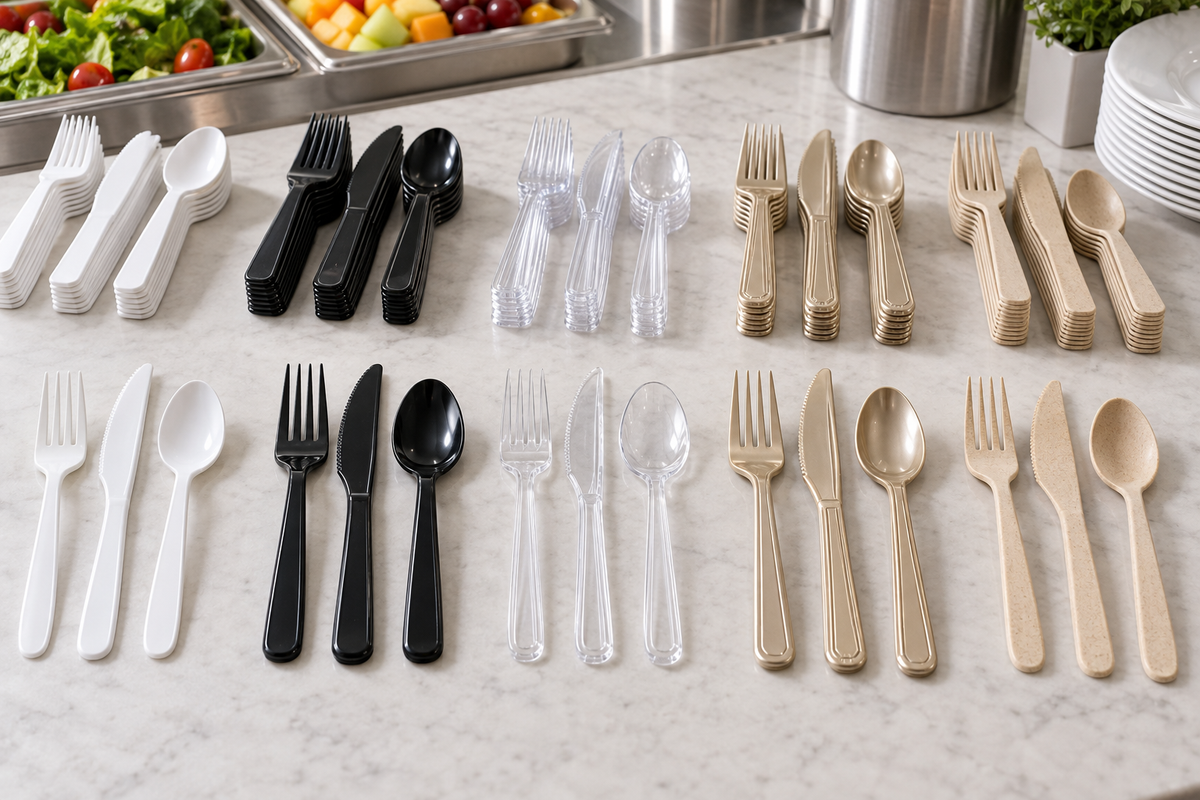
Disposable cutlery is available in colors such as black, white, clear, champagne, and natural tones. Color does not determine performance, but it can influence how the meal is presented.
-
Black cutlery creates a bold, polished appearance for takeout and catering.
-
White cutlery provides a clean, familiar look for everyday service.
-
Clear cutlery blends easily with many table settings and packaging styles.
-
Champagne-colored cutlery can give banquet or event service a more refined appearance.
-
Natural-colored cutlery may complement sustainability-focused or kraft packaging presentations.
Choose a color that works with the plates, bowls, napkins, cups, and packaging used throughout the meal.
WHAT IS BIO-BLEND CUTLERY?
Bio-blend cutlery combines plant-derived content with other materials to create a sturdy disposable utensil with a natural appearance.
Do not assume that terms such as “bio-blend,” “plant-based,” or “natural” automatically mean a product is compostable in every facility. Environmental characteristics and disposal requirements depend on the product’s specific construction, certifications, and available local waste systems.
Review the manufacturer’s documentation before making sustainability claims or placing the cutlery in a composting program.
HOW SERVICE STYLE AFFECTS YOUR CHOICE
The same meal may require different cutlery depending on how and where it is served.
| Service Style | Important Considerations |
|---|---|
| Takeout and delivery | Strength, utensil completeness, packaging space, and transport |
| Catering | Presentation, menu variety, and dependable performance |
| Cafeteria | Speed, cost per meal, storage, and consistent availability |
| Office breakroom | Versatility, compact storage, and simple restocking |
| School or healthcare dining | Meal type, user needs, facility procedures, and dependable supply |
| Banquet or event | Appearance, table setting, and strength for the full menu |
Consider whether customers select their own utensils or receive a complete set with every meal. Automatically including every utensil can increase waste when the menu only requires one or two pieces.
COMMON CUTLERY ORDERING MISTAKES
Choosing by Price Alone
The lowest-cost utensil may create more waste if it bends or breaks and customers take replacements. Compare the cost per successfully served meal—not simply the cost per piece.
Using One Grade for Every Menu Item
A medium-weight spoon may work perfectly for pudding but poorly for frozen dessert. Match cutlery strength to the food instead of using one grade everywhere without testing.
Assuming All “Heavy-Weight” Products Are Identical
Weight categories can vary by manufacturer and product line. Request samples or test a case before standardizing a large order.
Overlooking Case Quantity
Disposable cutlery is typically purchased in bulk. Confirm the number of pieces per pack and case so that price comparisons and storage plans are accurate.
QUICK TIP
Build a sample meal using the actual plates, bowls, containers, napkins, and cutlery being considered. Test the entire setup as a customer would—including cutting, piercing, scooping, carrying, and eating the food at its normal serving temperature.
SELECTION CHECKLIST
Before ordering disposable cutlery, ask:
✓ Which foods will be served?
✓ How much pressure will be needed to cut, pierce, or scoop them?
✓ Is medium, heavy, or extra-heavy construction appropriate?
✓ Are forks, knives, and spoons all necessary for the meal?
✓ Does the color match the desired presentation?
✓ Will the utensils fit inside the takeout packaging?
✓ What is the pack and case quantity?
✓ Is there enough storage space for the order?
✓ Have the utensils been tested with the actual menu?
KEY TAKEAWAY
The best disposable cutlery is not automatically the heaviest option. Medium-weight cutlery can be practical for lighter foods and simple service, heavy-weight cutlery provides versatility for complete meals, and extra-heavy cutlery adds strength and a more substantial feel for demanding or presentation-focused applications.
Matching the utensil grade, type, and style to the menu helps control costs while giving customers a better dining experience.
CONCLUSION
Choosing disposable forks, knives, and spoons requires more than selecting a color or comparing case prices. Food texture, serving temperature, service style, utensil strength, presentation, and storage all affect the right choice.
BuyRight Supply offers medium-, heavy-, extra-heavy-, and bio-blend disposable cutlery in several colors and styles to support restaurants, catering operations, cafeterias, offices, schools, healthcare facilities, and special events.
Share:
Plastic Film, Foil, or Food Paper? How to Choose the Right Food Wrap
Cup and Lid Compatibility: How to Prevent Leaks, Spills, and Ordering Mistakes