
THE 30-SECOND VERSION
- Choose cups based on beverage temperature, cup material, serving size, presentation, and handling needs.
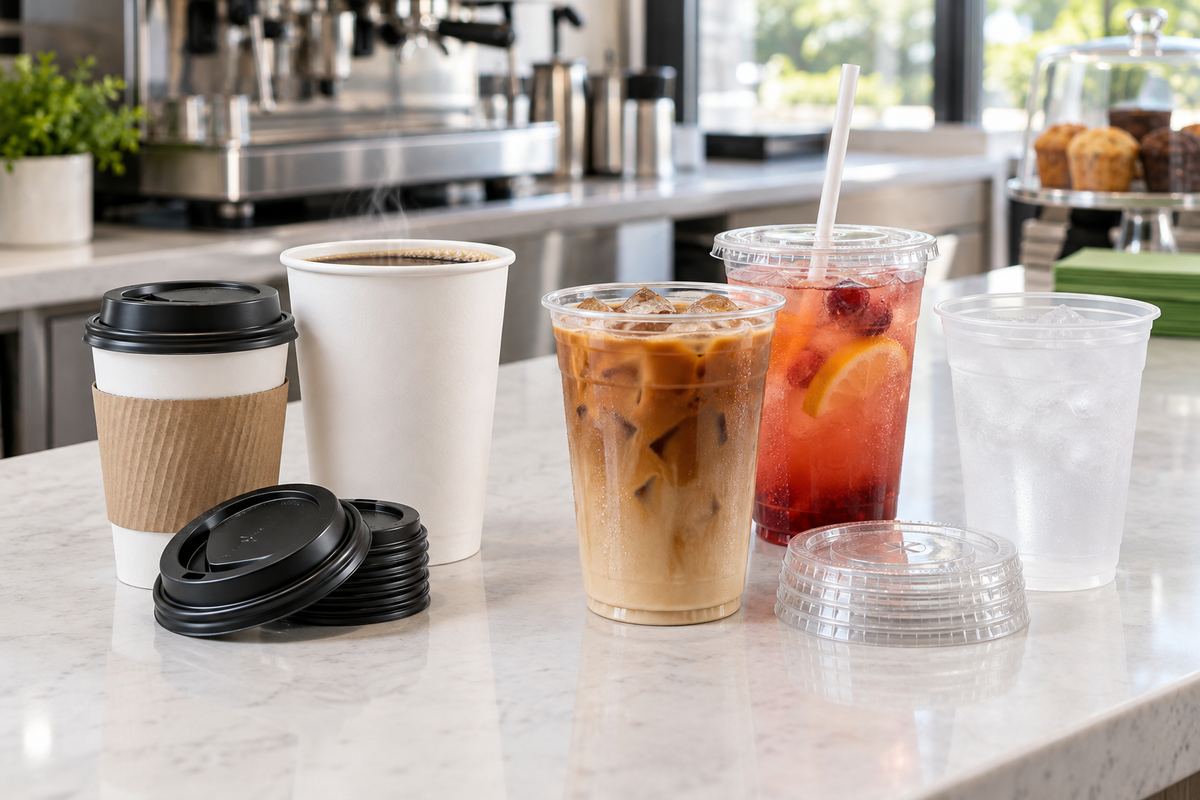
- Paper and foam cups are commonly used for hot beverages, while PET, polypropylene, and translucent plastic cups serve different cold-drink applications.
- Lid compatibility depends on the cup’s rim diameter and product series—not simply its listed ounce capacity.
- Straw-slot lids are designed for cold drinks, while vented and sip-through dome lids support hot-beverage service.
- Double-wall cups and sleeves help make hot drinks more comfortable to hold.
- Test the cup-and-lid combination before ordering a large quantity.
START WITH THE BEVERAGE
Disposable cups may appear straightforward, but the wrong cup or lid can create leaks, spills, uncomfortable handling, and unnecessary inventory. The first step is identifying what will be served and how customers will use it.
Consider:
- Whether the beverage is hot or cold
- The desired serving size
- Whether the drink includes ice, toppings, or a straw
- How far the beverage will be carried
- Whether the cup needs to support presentation
- Whether individual wrapping is important
- Which lids and accessories must fit the cup
A coffee shop, office breakroom, concession stand, healthcare facility, and catering operation may all need disposable cups, but they will not necessarily need the same cup system.
HOT CUPS VS. COLD CUPS
The most important distinction is whether the cup is designed for hot or cold beverages. Materials that work well for iced drinks may soften, deform, or become uncomfortable when exposed to heat. Cups intended for hot drinks are constructed to manage higher temperatures.
| Cup Type | Common Applications | Primary Consideration |
|---|---|---|
| Paper hot cup | Coffee, tea, cider, and hot chocolate | Heat resistance and comfortable handling |
| Double-wall paper cup | Hot drinks served for carryout or longer handling | Added insulation |
| Foam cup | Hot or cold beverages, depending on the product | Insulation and applicable facility requirements |
| PET clear cup | Iced drinks, smoothies, and visible specialty beverages | Clarity and presentation |
| Polypropylene cup | Cold beverages and portioned service | Flexibility and durability |
| Translucent cup | Fountain drinks, water, and general cold-beverage service | Practicality and cost control |
Always verify the manufacturer’s intended temperature range and application. A cup’s appearance alone does not confirm that it is safe or appropriate for a particular beverage.
CHOOSING PAPER HOT CUPS
Paper hot cups are widely used for coffee, tea, and other warm beverages. They provide a familiar service format and are available in multiple sizes and constructions.
A standard paper hot cup may require a sleeve when used with higher-temperature beverages. The sleeve creates another layer between the customer’s hand and the cup, improving comfort without requiring a second cup.
Double-wall paper hot cups incorporate additional insulation into the cup itself. They may reduce or eliminate the need for a separate sleeve in some applications, although performance depends on the beverage temperature and specific cup construction.
When comparing standard and double-wall cups, consider:
- Beverage serving temperature
- Length of time customers will hold the drink
- Cost of separate sleeves
- Storage space for cups and accessories
- Desired appearance and customer experience
UNDERSTANDING PLASTIC COLD CUPS
Plastic cold cups are available in multiple materials, including PET and polypropylene. Each material has different visual and handling characteristics.
PET cups are known for their clear appearance, making them useful when beverage presentation matters. Smoothies, iced coffee, specialty drinks, and colorful beverages remain visible through the cup.
Polypropylene cups may have a slightly different appearance and feel. They can provide practical durability for cold-beverage service. Individually wrapped cup options may also be useful in settings where cups need to remain protected until use.
Translucent cups are a straightforward choice for water, fountain drinks, and other everyday cold beverages where high clarity is not the main priority.
WHY LID COMPATIBILITY MATTERS
A lid that appears to be the correct size can still fit poorly. Cup capacity is measured in ounces, but lids generally fit according to the cup’s rim diameter and compatible product series.
For example, one lid may fit multiple cup capacities when those cups share the same rim diameter. Two cups with the same ounce capacity may require different lids if their rim dimensions or constructions are different.
A poor cup-and-lid fit can result in:
- Lids that pop off during handling
- Leakage around the rim
- Difficulty securing the lid
- Cracked or deformed cups
- Wasted cups and lids
- Increased risk of spills
For reliable ordering, record the cup manufacturer, product number, capacity, rim diameter, and approved lid options.
STRAW-SLOT, VENTED, AND DOME LIDS
Different lid styles serve different purposes.
Straw-Slot Lids
Flat straw-slot lids are commonly used with cold drinks. The opening helps keep the straw positioned while reducing the amount of uncovered space at the top of the cup.
Clear PET lids can also preserve product visibility, which is helpful for iced beverages and specialty drinks.
Vented Lids
Vented lids allow steam and pressure to escape. They are often used for hot beverages, although the exact drinking opening and vent design vary by product.
Proper venting can improve drink flow and help prevent pressure from building beneath the lid.
Dome Hot-Cup Lids
Dome lids provide additional space above the cup’s rim and typically include an opening for sipping. They can make hot beverages easier to drink while the lid remains attached.
The dome shape should not be confused with cold-cup dome lids designed to create room for whipped toppings. Confirm the lid’s intended beverage type before ordering.
WHEN SHOULD YOU USE A CUP SLEEVE?
Cup sleeves are designed to make hot cups more comfortable to hold. They are particularly useful with standard single-wall paper cups and beverages served at higher temperatures.
A sleeve may be helpful when:
- Customers carry beverages away from the serving area
- Drinks remain hot for an extended time
- Employees report that cups are uncomfortable to handle
- A standard paper cup does not provide enough insulation
Sleeves must also match the intended range of cup sizes. A sleeve that is too loose can slide, while one that is too tight may be difficult to apply or distort the cup.
BUILDING A SIMPLER CUP-AND-LID SYSTEM
Too many cup and lid combinations can create confusion, increase storage requirements, and lead to ordering mistakes. Facilities can often simplify inventory by selecting cup sizes that share a compatible lid—but only when the manufacturer confirms that compatibility.
A streamlined system may include:
- A small number of frequently used cup sizes
- One verified lid for multiple compatible cold-cup sizes
- A separate verified lid system for hot cups
- Sleeves for applicable paper cups
- Clearly labeled storage locations
- Product numbers recorded on the reorder list
Reducing unnecessary variations makes it easier for employees to restock service areas and select the correct lid during busy periods.
MATCHING CUPS TO YOUR OPERATION
| Business or Facility | Useful Cup Considerations |
|---|---|
| Coffee shop or café | Hot cups, insulated options, sleeves, and secure sip-through lids |
| Restaurant or concession stand | Fast dispensing, dependable lid fit, and common cold-drink sizes |
| Catering operation | Transport stability, presentation, and multiple beverage temperatures |
| Office breakroom | Simple cup sizes, compact storage, and easy reordering |
| Healthcare facility | Protected storage, practical portions, and application-specific products |
| Retail or convenience store | High-volume dispensing and simplified cup-and-lid compatibility |
The right system should support both the beverage and the way it moves from the service counter to the customer.
COMMON MISTAKE
The most common mistake is ordering lids based only on the cup’s ounce capacity. Capacity does not guarantee compatibility.
Do not assume a lid marked for a range such as 12–24 ounces will fit every cup within that range. Verify the exact cup series and rim dimensions before purchasing.
QUICK TIP
Keep one correctly matched cup and lid near the storage area as a physical reference. Label the shelf with both product numbers so employees can quickly confirm the correct pairing when stocking or reordering.
SELECTION CHECKLIST
Before ordering disposable cups and lids, ask:
✓ Will the beverage be served hot or cold?
✓ Which cup material best fits the application?
✓ What serving sizes are used most frequently?
✓ Does presentation or cup clarity matter?
✓ Is additional insulation needed?
✓ Are the cup and lid confirmed as compatible?
✓ Does the lid need a straw slot, vent, or sip opening?
✓ Can multiple cup sizes safely share one lid?
✓ How much storage space is available?
KEY TAKEAWAY
Choosing disposable cups and lids is about more than selecting a size. Beverage temperature, material, insulation, rim diameter, lid style, presentation, and storage all affect how well the system performs.
The best choice is a verified cup-and-lid combination that serves the beverage safely, fits the customer experience, and keeps inventory manageable.
CONCLUSION
A dependable cup-and-lid system helps prevent spills, simplify service, and reduce wasted inventory. Start with the beverage, select the appropriate cup material and size, and confirm compatibility using manufacturer information rather than appearance alone.
BuyRight Supply offers paper, foam, PET, polypropylene, and translucent cups along with straw-slot, vented, and dome lids, hot-cup sleeves, and other options for food-service and commercial operations.
Share:
Choosing Disposable Cutlery: Medium, Heavy, or Extra Heavy?
How to Choose the Right Commercial Broom, Mop, Duster, and Cleaning Accessories