
|
THE 30-SECOND VERSION · Identify the dispenser before ordering paper; do not rely on “standard” or “jumbo” alone. · Verify maximum roll diameter, roll width, core size and dispensing format. · Separate fit problems from feed problems—the causes and fixes are different. · Test one case or sample roll before converting an entire facility. |
|
WHY “IT SHOULD FIT” IS NOT ENOUGH |
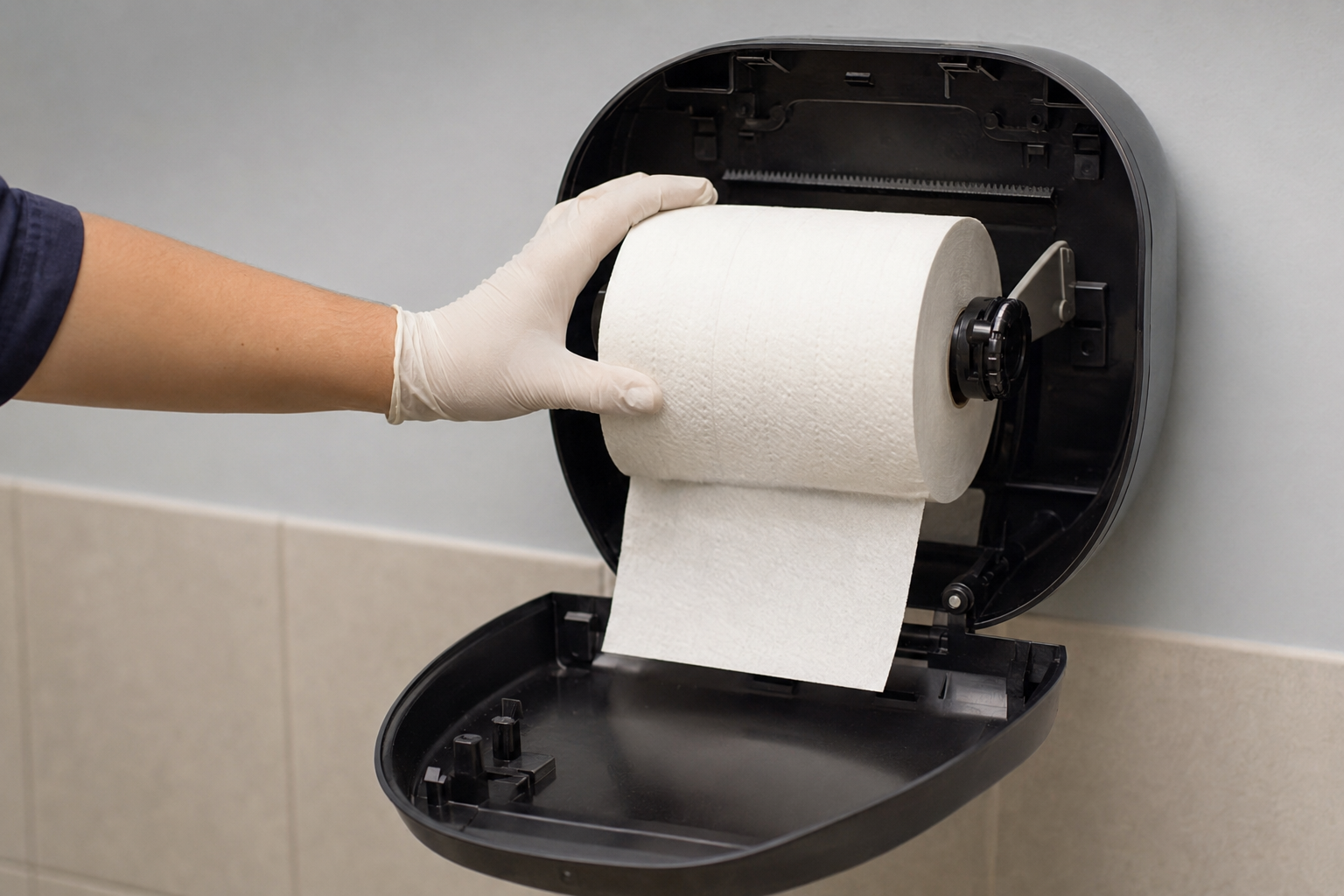
Commercial toilet paper is sold in several formats, including standard bath tissue, jumbo roll tissue, junior jumbo, coreless rolls and controlled-use systems. Dispensers may accept a broad range of products or only a narrow specification. Similar-looking rolls can differ enough in diameter, width or core design to jam, drag, fall off the spindle or prevent the cover from closing.
Compatibility problems create more than a maintenance inconvenience. A roll that does not dispense smoothly increases waste, complaints and service calls. A roll that cannot be installed can leave a restroom out of service while unopened cases remain in inventory. Purchasing teams can avoid most failures by treating the dispenser and paper as one system.
|
💡 QUICK TIP Photograph the dispenser label, interior spindle and installed roll before requesting a replacement product. One clear reference can prevent repeated measuring and guesswork. |
|
THE FIVE SPECIFICATIONS THAT MATTER MOST |
|
Specification |
What to verify |
What goes wrong when it differs |
|
Roll diameter |
Maximum outside diameter the closed dispenser can hold. |
The cover will not close, the roll rubs, or a replacement cannot be loaded. |
|
Roll width |
Space between side supports and the width approved by the dispenser. |
The roll binds, shifts sideways or falls from the mounting points. |
|
Core size |
Inside diameter and shape of the cardboard core or coreless opening. |
The roll will not fit the spindle, spins poorly or sits too loosely. |
|
Spindle system |
Fixed spindle, removable spindle, stub posts, adapters or proprietary hubs. |
The roll cannot be secured even when its overall size appears correct. |
|
Dispensing format |
Standard roll, jumbo, coreless, folded or controlled-use tissue. |
The sheet path, transfer mechanism or roll orientation does not function. |
|
PROBLEM 1: THE ROLL IS TOO LARGE |
A roll may fit between the side supports but still exceed the dispenser’s maximum diameter. When the cover presses against the paper, the roll can drag or stop turning. Users may pull harder, tearing off small pieces and increasing waste. Measure the new roll at its widest point and compare it with the dispenser specification—not only with the nearly empty roll being replaced.
|
PROBLEM 2: THE CORE AND SPINDLE DO NOT MATCH |
Core size is easy to overlook because it is hidden once the roll is installed. A core that is too small will not slide onto the spindle. A core that is too large can wobble or dispense unevenly. Coreless rolls require the correct internal supports or adapters and should not be treated as ordinary cored tissue.
|
⚠ COMMON MISTAKE Problem: removing or improvising adapters to make a roll fit. ↓ Why it happens: the roll dimensions look close. ↓ Better approach: confirm the manufacturer-approved spindle, hub or adapter configuration and stock the correct paper format. |
|
PROBLEM 3: THE ROLL FITS BUT WILL NOT DISPENSE SMOOTHLY |
If the roll installs correctly, investigate the feed path. The paper may be loaded in the wrong direction, caught behind a guide, compressed by an overfilled cabinet or routed incorrectly through a controlled-use mechanism. Damaged paper edges and moisture can also cause sheets to tear unevenly. Clean away paper dust and confirm that moving parts turn freely before blaming the tissue itself.
· Check whether the roll rotates without rubbing the housing.
· Confirm the paper exits through the intended opening or cutting edge.
· Look for crushed sides, torn edges, moisture damage or an out-of-round roll.
· Verify that reserve-roll and transfer mechanisms are loaded in the proper sequence.
· Test several pulls with the cover closed, since an open dispenser may behave differently.
|
PROBLEM 4: THE DISPENSER IS PROPRIETARY |
Some restroom systems use distinctive cores, hubs, adapters or controlled-dispensing features that limit compatible products. A paper roll with the same general dimensions may still fail because the interface is different. Look for a model number inside the cover or on the mounting plate, then confirm the approved paper specification. If the system requires proprietary refills, compare the total system cost and service benefits before deciding whether to keep or replace it.
|
ⓘ DID YOU KNOW? “Universal” usually means compatible with a stated range of dimensions and formats—it does not mean every commercial toilet paper roll will fit every dispenser. |
|
PROBLEM 5: DOUBLE-ROLL TRANSFER FAILS |
High-capacity and double-roll dispensers may include a sliding door or automatic transfer feature designed to hold a reserve roll until the first is depleted. Loading both positions too early, using the wrong diameter or leaving an oversized stub can block the mechanism. Define the minimum stub size for transfer and train staff on the exact loading sequence.
|
A BETTER PURCHASING AND CONVERSION PROCESS |
|
Step |
Action |
Result |
|
1 |
Record dispenser brand, model and format at every restroom location. |
Creates a reliable equipment inventory. |
|
2 |
Capture diameter, width, core and spindle requirements. |
Replaces vague terms with measurable specifications. |
|
3 |
Map approved tissue SKUs to each dispenser family. |
Prevents the wrong case from reaching the restroom. |
|
4 |
Trial the product in the oldest and newest dispensers. |
Reveals wear, model changes and fit differences. |
|
5 |
Label stock locations and standardize where practical. |
Reduces selection errors and emergency substitutions. |
|
TROUBLESHOOTING CHECKLIST |
· ✓ Dispenser model is identified.
· ✓ Cover closes without contacting the roll.
· ✓ Roll width fits without binding or excessive side movement.
· ✓ Core and spindle or adapter match securely.
· ✓ Paper follows the intended feed path.
· ✓ Reserve-roll or transfer feature operates correctly.
· ✓ Tissue remains dry and undamaged in storage.
· ✓ A complete roll dispenses successfully during a live trial.
|
✓ KEY TAKEAWAY Compatibility depends on the complete interface between roll and dispenser. Record the model, measure the critical dimensions and verify the dispensing format before ordering at scale. |
|
CONCLUSION |
The fastest way to solve toilet paper compatibility problems is to stop describing products only as standard, jumbo or coreless. Those names narrow the category, but measurements and dispenser details determine whether the system works. A simple equipment inventory and approved-SKU map can reduce wasted purchases, restroom downtime and recurring service calls.
Explore Toilet Paper
Share:
How to Create a Better Restroom Inspection Checklist
When Should Workers Wear High-Visibility Safety Apparel?