
|
THE 30-SECOND VERSION ✓ Measure roll width, outside diameter, core diameter and weight. ✓ Use the maximum expected production roll—not a partly used sample. ✓ Confirm both material capacity and cutter span. ✓ Leave working clearance without greatly oversizing the station. ✓ Consider how employees will load, support and replace the roll. |
|
THE FOUR MEASUREMENTS THAT MATTER |
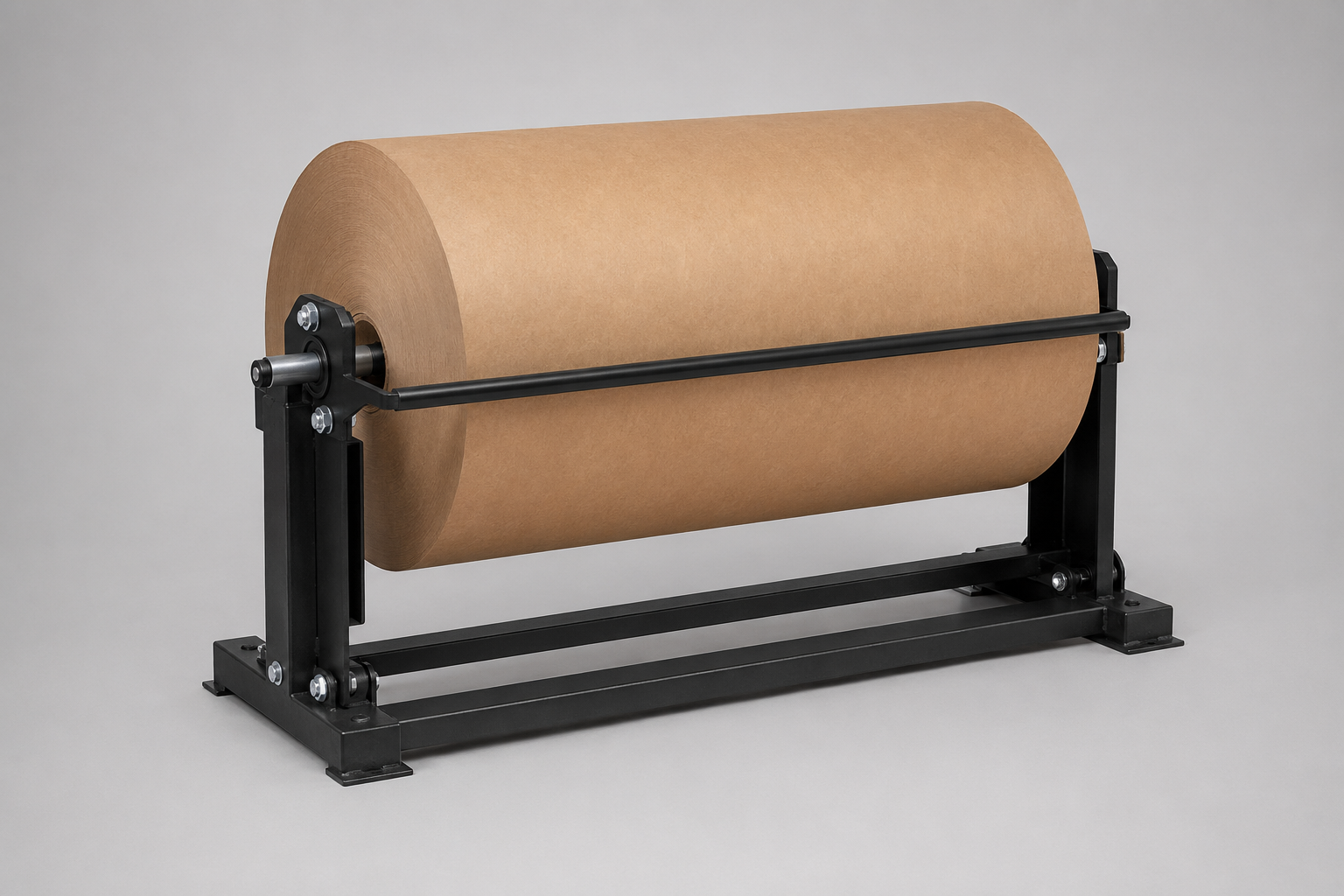
Width is the distance across the roll face and determines the minimum usable span of the dispenser and cutter. Outside diameter is measured across the full wound roll and controls frame clearance. Core diameter is the opening through the center and must match the spindle, dowel or adapter system. Weight affects structural capacity, stability and loading method.
Record manufacturer specifications when available, then verify a representative full roll. Materials wound to the same nominal length can have different diameters or weights because of gauge, density and winding tension.
|
MEASURE CONSISTENTLY |
Use a tape or caliper for width and core diameter, and measure outside diameter through the center of a full roll. Weigh the roll if supplier documentation does not provide a reliable loaded weight. Do not use a partially consumed roll as the sizing reference.
If the facility purchases from multiple suppliers, record the largest normal value for each dimension. Keep the product identifier beside the measurements so purchasing can recognize when a material change requires a compatibility review.
|
Measurement |
How to capture it |
What it affects |
|
Roll width |
Face to face across roll |
Frame and cutter span |
|
Outside diameter |
Across full roll center |
Clearance and rotation |
|
Core diameter |
Inside core opening |
Spindle or adapter fit |
|
Loaded weight |
Full production roll |
Capacity, stability, loading |
|
💡 QUICK TIP Keep one sample roll or a verified specification sheet beside the equipment-selection record so future substitutions can be checked quickly. |
|
WIDTH: ALLOW THE MATERIAL TO TRACK |
The dispenser’s usable width must accommodate the roll without pinching the edges. The cutting span must also cover the material width. When the roll has too little lateral clearance, it can rub, feed unevenly or damage the material edge.
Excessive width is not automatically helpful. A much wider system consumes space and may allow a narrow roll to wander unless guides or collars control its position. Select enough room for normal tolerance and expected supplier variation.
|
DIAMETER: PROTECT ROTATIONAL CLEARANCE |
A roll may fit between the side frames but still contact the wall, shelf, lower roll or work surface as it rotates. Check clearance at full diameter and through the entire material path. Multi-roll equipment also needs separation between adjacent rolls.
Diameter affects how often rolls are changed. Larger rolls may reduce changeovers, but only if equipment and loading practices support them. Do not trade manageable roll handling for theoretical replenishment savings.
|
CORE DIAMETER: CONNECT ROLL TO EQUIPMENT |
Core size determines how the roll sits on its support. A spindle that is too large will not enter the core; one that is too small may need adapters or core plugs to center the roll. Poor centering can create drag, telescoping or uneven feeding.
Verify whether adapters are supplied, optional or unavailable. Also confirm that the roll’s core has sufficient strength for its weight, particularly when supported only at the ends.
|
WEIGHT: PLAN FOR STRUCTURE AND LOADING |
Loaded weight should remain within the equipment’s rated capacity. The frame, spindle, fasteners and casters all participate in supporting the load. Wall-mounted units additionally depend on wall structure and installation hardware.
Evaluate the loading task separately from static capacity. A unit may safely hold a roll that employees cannot safely lift into position. Heavy or high-mounted rolls may require lower loading height, two-person handling or mechanical assistance.
|
Capacity checkpoint |
Question to verify |
|
Equipment rating |
Does the full roll remain within stated capacity? |
|
Support system |
Does the spindle or dowel fit the core and load? |
|
Installation |
Can the wall, counter or floor support operating forces? |
|
Loading |
Can the roll be placed without awkward lifting? |
|
Mobility |
Are casters rated and lockable under full load? |
|
BUILD A COMPATIBILITY RECORD |
Create one line for each commonly purchased roll: supplier SKU, material, width, diameter, core and weight. Add the approved equipment model and any required adapter. This turns future purchasing decisions into a quick check instead of repeated guesswork.
Recheck compatibility when changing material gauge, roll length, supplier or core construction. A small purchasing change can alter the physical roll even when the marketed width remains the same.
|
BUY CAPACITY WITH PURPOSE |
Choose modest headroom for normal variation and planned products, not unlimited capacity. The right-sized system controls the roll, fits the space and supports safe handling. A documented measurement process is more reliable than choosing the largest available dispenser as insurance.
|
⚠ COMMON MISTAKE Sizing from a used roll → diameter and weight are understated → measure a full production roll or use verified supplier maximums before approving equipment. |
|
CONCLUSION |
A roll dispenser or cutter earns its place by making routine work more controlled, repeatable and practical. A disciplined selection process reduces fit surprises, protects workspace and gives operators equipment that works with the material rather than against it.
|
✓ KEY TAKEAWAY A compatible system must pass all four checks: width, outside diameter, core and weight. If any one fails, the roll may not feed, rotate, fit or load safely. |
Explore Equipment
Share:
Foam Soap vs. Liquid Soap: Which Is Better for Your Facility?
Wall-Mounted, Countertop or Freestanding Dispensers: Which Setup Is Best?