

|
THE 30-SECOND VERSION • Separate hot, cold, raw, ready-to-eat, and allergen-sensitive foods. • Use rigid, leak-resistant containers with fully seated lids. • Precondition insulated carriers and verify temperatures with a calibrated thermometer. • Load heavy items low, eliminate open space, and prevent pans from sliding. • Record departure and arrival checks for a clear handoff. |
BUILD THE TRANSPORT PLAN BEFORE PACKING
Transportation is part of food service, not a gap between the kitchen and the event. The route length, vehicle space, weather, venue access, elevator use, staging time, and distance from unloading to the buffet all affect how food should be packed. A ten-minute drive can become a forty-minute holding period when loading and setup are included.
Work backward from the service time. Assign a departure temperature check, estimated travel time, unloading window, setup sequence, and final verification. If the plan depends on everything going perfectly, it needs more temperature capacity, more time, or a simpler load.
USE CONTAINERS THAT CONTROL LEAKS AND MOVEMENT
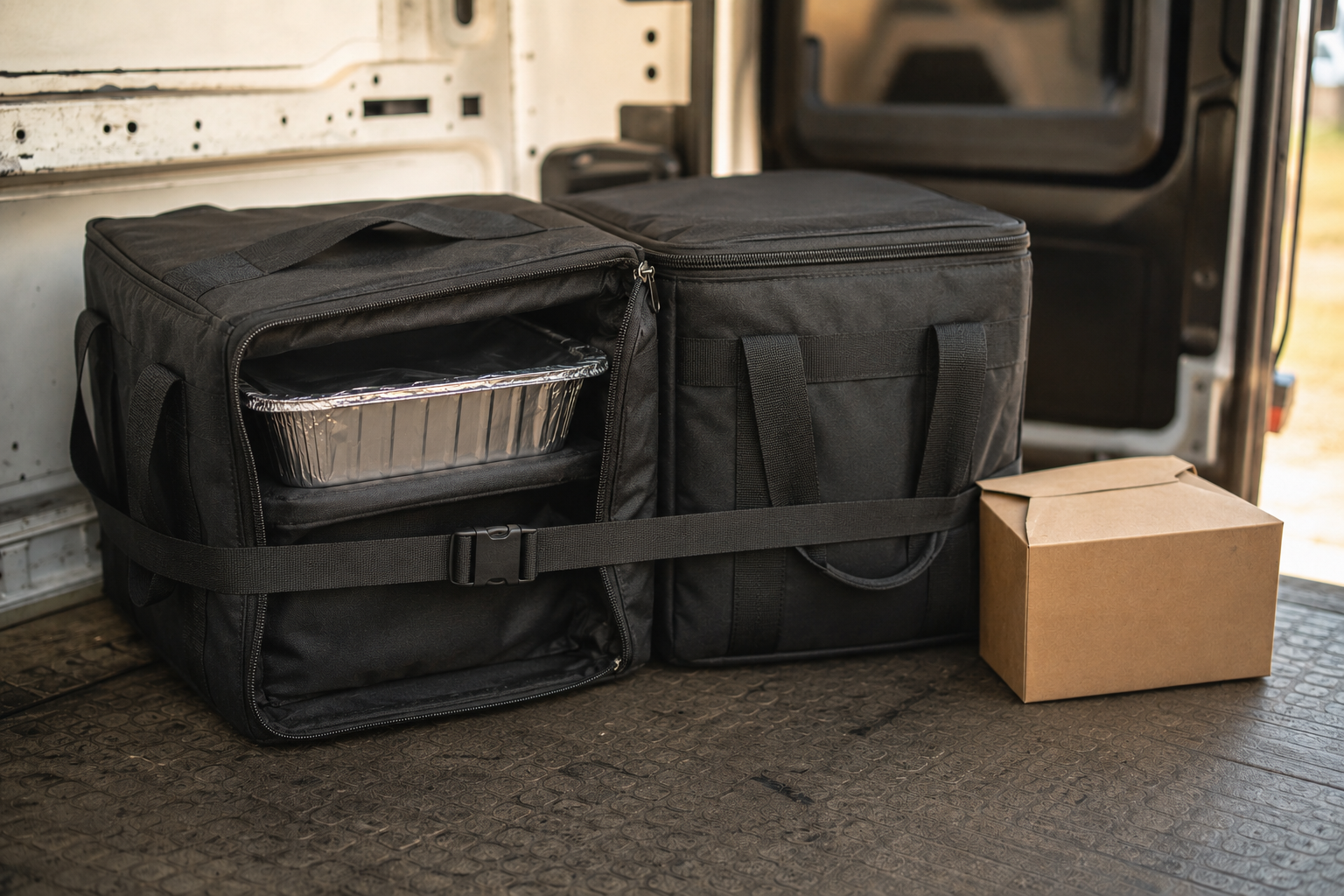
Choose containers for the weight and behavior of the food. Liquids and sauced entrées need rigid walls, secure lids, and upright placement. Delicate garnishes and baked goods need protection from crushing. Disposable aluminum pans may need a sheet pan or rigid base underneath because a filled pan can flex when lifted.
• Fill containers to a level that leaves room for safe handling and lid clearance.
• Seat every lid around the complete rim; use tamper-evident seals when the process requires them.
• Place leak-prone pans inside a secondary tray or containment bin.
• Label the item, destination, temperature class, allergens, and setup position.
|
⚠ COMMON MISTAKE PROBLEM ↓ WHY IT HAPPENS ↓ BETTER APPROACH |
PROTECT TIME AND TEMPERATURE
For commercial operations, the FDA Food Code is a model used by many jurisdictions; local rules determine the exact requirements. Common Food Code holding benchmarks are 135°F or above for hot time/temperature control for safety food and 41°F or below for cold food. Use a calibrated food thermometer and follow the applicable state or local code rather than relying on how warm or cold a container feels.
|
LOAD TYPE |
CONTROL |
VERIFY |
|
Hot food |
Preheat insulated carriers; minimize open time; keep hot and cold loads separate. |
Check the food—not just the carrier—at departure and arrival. |
|
Cold food |
Pre-chill carriers and use sufficient cold sources without allowing meltwater contact. |
Confirm the coldest system can maintain the entire planned window. |
|
Room-temperature items |
Keep covered, clean, dry, and protected from chemicals or dirty equipment. |
Inspect seals and packaging at handoff. |
|
Frozen food |
Use equipment and cold sources appropriate for the route and product. |
Reject or assess any load with an unexplained temperature-control failure. |
|
ℹ DID YOU KNOW? Temperature control can fail during staging even when the drive is short. Include kitchen loading, vehicle loading, unloading, and venue setup in the total transport window. |
CREATE CLEAN ZONES INSIDE THE VEHICLE
The cargo area should be clean, dry, and free from chemicals, tools, personal items, or anything that could contaminate food. Keep ready-to-eat food away from raw ingredients. Separate allergen-sensitive orders and make the labels visible so staff do not need to open containers to identify them.
Use washable nonslip mats, crates, dividers, or straps to limit travel. Heavy carriers belong low and near the center of the load. Do not place food where it can tip when a door opens. Leave room for airflow when powered refrigeration or warming equipment depends on circulation.
LOAD IN THE ORDER THE TEAM WILL UNLOAD
A secure load is also an efficient load. Pack the last setup items first and the first-needed items last so the team can unload without moving every carrier. Keep each event or service station grouped. A simple color label can distinguish buffet line, beverages, dessert, back-up food, and service supplies.
• Confirm that carriers are closed, latched, and labeled.
• Place heavy, stable items at the bottom and delicate items above them.
• Fill lateral gaps with rigid dividers—not loose items that can become contamination risks.
• Secure wheeled carts and prevent crates from sliding during braking.
• Keep thermometers, gloves, towels, and spill supplies immediately accessible.
USE A DOCUMENTED HANDOFF
At arrival, inspect the load before service. Check food temperatures according to the operation’s procedure, look for broken seals or leaks, and document any issue. Food affected by a temperature-control failure should not be served automatically; follow the applicable food-safety plan and regulatory requirements for evaluation or disposal.
Assign one person to confirm that each carrier reached its intended station. This prevents a backup pan from remaining in the vehicle and makes accountability clear when multiple teams handle packing, driving, and setup.
PRE-DEPARTURE CHECKLIST
• Route, access instructions, contacts, and setup timing confirmed.
• Vehicle cargo area inspected and cleaned.
• Hot and cold carriers preconditioned.
• Containers closed, supported, labeled, and separated by risk.
• Departure temperatures recorded with a calibrated thermometer.
• Load stabilized and unloading sequence confirmed.
• Arrival inspection and final temperatures assigned to a specific employee.
CONCLUSION
Secure catering transportation is a controlled process, not simply careful driving. The strongest system combines suitable containers, temperature verification, clean separation, stable loading, and a documented handoff. When those steps are standardized, the team can protect food quality and safety while reducing spills, delays, and last-minute confusion at the venue.
|
KEY TAKEAWAY Plan for the complete time away from controlled equipment. Secure the food physically, control its temperature, separate contamination risks, and verify the load at both ends of the trip. |
Explore Catering Supplies
Share:
How to Choose Disposable Serving Utensils for a Buffet
How to Choose the Right Steam Table Pan Size and Depth